
Which water heater valve are you replacing
A water heater has several valves, and the one people mean when they ask about replacing a valve is usually the temperature and pressure relief valve, often called the T and P valve. It is a safety device that opens when the tank gets too hot or the pressure climbs too high.
Other valves on the tank are the drain valve at the bottom, the cold-water shutoff above it and, on gas units, the gas control valve. This guide covers the relief valve and the drain valve, and says when a plumber should do the work.
Why the relief valve matters
A water heater is a sealed tank under pressure with a heat source. If the thermostat or the control fails, the water can overheat, and the relief valve is what keeps the tank from becoming a hazard.
Never cap a relief valve, plug it or tighten it to stop a drip. A dripping valve is a message. It may be worn, or it may be reacting to high water pressure or heat.
Signs a valve needs attention
Different symptoms point to different parts.
Constant drip from the discharge pipe
A worn valve seat, mineral buildup or high pressure in the house.
Water pooling at the bottom drain valve
The drain valve seal has failed, which is common on older tanks.
Corrosion on the valve
Mineral and rust buildup can keep the valve from closing.
A valve that has never been tested
Many manufacturers suggest testing it from time to time.
Replacing a relief valve step by step
This is the process a plumber follows. If any step is unclear, call.
- Shut off power or gasTurn off the breaker or set the gas control to off.
- Close the cold supplyClose the shutoff above the tank.
- Relieve pressure and drainOpen a hot tap to relieve pressure, then drain a few gallons so water is below the valve level.
- Remove the old valveUnscrew the discharge pipe and then the valve itself.
- Install the new valveUse a valve with the correct pressure and temperature rating, wrap the threads with sealant and tighten.
- Reconnect and refillReattach the discharge pipe so it points down toward a safe spot, open the supply and a hot tap to purge air, then restore power or gas.
Valve dripping or stuck?
Call. A relief valve is a safety part, and replacement takes one visit.
Valve problems and what to do
A quick guide.
| Problem | Likely cause | What to do |
|---|---|---|
| Drip from the relief pipe | Worn valve or high pressure | Test pressure, replace the valve if needed |
| Hot water or steam from the valve | Overheating | Turn off power or gas and call right away |
| Drain valve leaks | Worn seal or sediment | Replace the drain valve |
| Valve will not close | Debris or corrosion | Replace it |
Haverford Township rules that touch water heater work
Haverford Township says plumbing work done by contractors is performed by Township-licensed plumbers and inspected under the Pennsylvania Uniform Construction Code. The Building and Codes Department at 610-446-1000 can say whether a valve swap needs a permit.
We do not quote your water pressure or hardness from memory, since both vary by street. Ask your water supplier for its report, or test your tap with a pressure gauge, before you decide the valve is the real problem.
Discharge pipe rules that matter
The pipe attached to the relief valve must run downward, end within a few inches of the floor or a drain and have no valve, cap or threaded end. A discharge pipe that is shortened or capped defeats the safety valve.
If you find a cap on the end of the discharge pipe, take it off and call a plumber. That cap is a hazard, and it usually means someone tried to stop a drip without fixing the cause.
Testing the valve safely
Manufacturers commonly suggest lifting the lever briefly once a year to confirm the valve opens and reseats. Do it with the discharge pipe pointing to a safe spot, because the water that comes out is hot. If the valve drips afterward, it did not reseat.
A valve that fails the test needs replacing. Do not tap it with a tool or force it, since that can damage the seat.
Why pressure can be the real problem
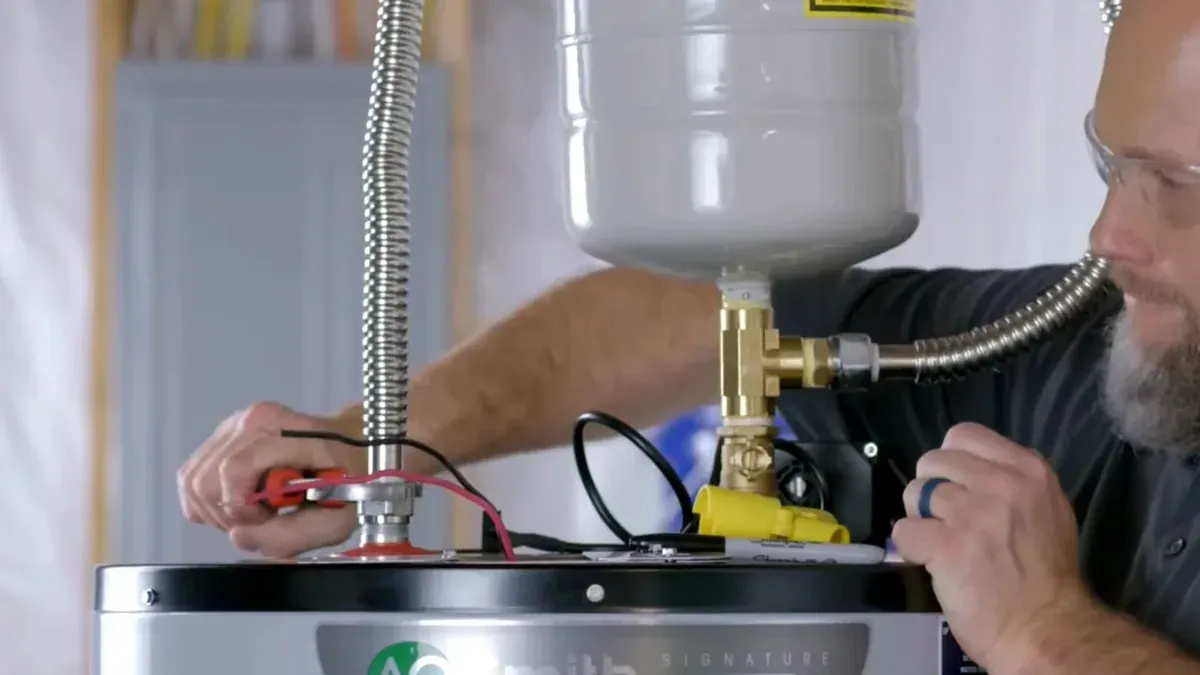
A relief valve that drips every time the heater runs is often reacting to thermal expansion. When water heats in a closed system, it expands and pressure rises. An expansion tank gives that water somewhere to go.
If your house has a pressure-reducing valve or a backflow device on the supply, the system is closed and an expansion tank is usually needed. A plumber can test the pressure and tell you if a new valve alone will solve the drip.
The standard behind a relief valve
Temperature and pressure relief valves for water heaters are built to a recognized safety standard, ANSI Z21.22, and the plumbing code, including the International Plumbing Code, or IPC, requires one on every storage heater.
Check the label on any replacement valve for the standard and for the pressure and temperature rating. A valve without that marking should not go on your tank.
When to call a plumber instead
If the valve is hot, steaming or spraying, stop and call. If the discharge pipe has been replaced with a cap or a smaller line, call. If the tank is old and rusted at the valve, a replacement valve may not be enough.
For a tank at the end of its life, see water heater replacement. For an element or thermostat issue, see water heater repair. We serve Broomall and Wynnewood too.
Questions Haverford homeowners ask
A steady drip is not normal. It may be a worn valve or a pressure problem. Have it checked.
Never. The valve is a safety device, and plugging it removes the protection it provides.
Many manufacturers suggest testing it about once a year by lifting the lever briefly, with the discharge pipe pointed to a safe drain.
It must match the tank's pressure and temperature rating and the discharge opening. Read the data plate or ask a plumber.
The Township says plumbing work is inspected under the Uniform Construction Code. Call the Building and Codes Department at 610-446-1000 to confirm what applies.