
Tankless water heaters in Haverford, PA
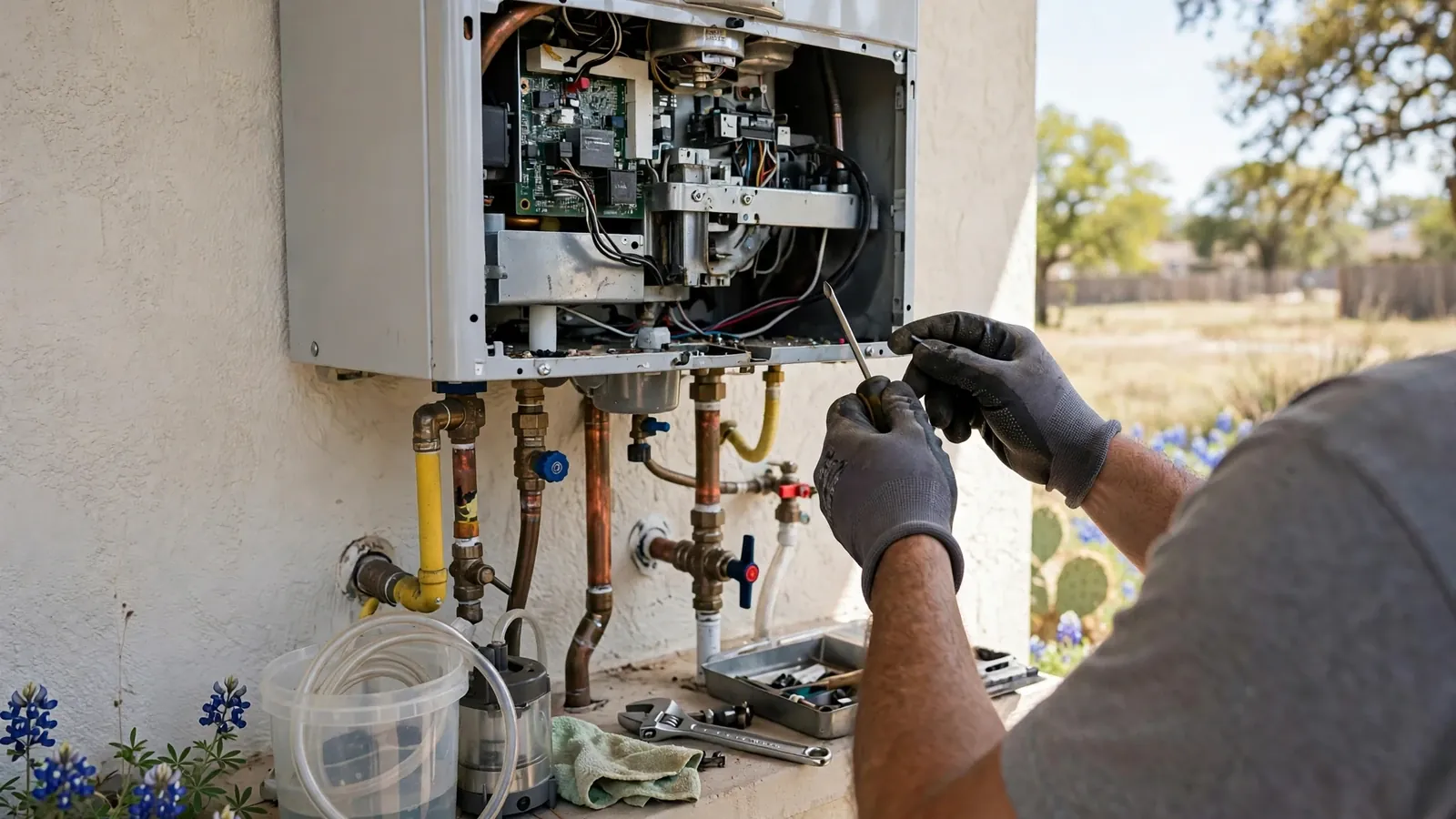
A tankless water heater heats water as you use it instead of keeping a tank hot all day. The unit is wall-mounted and small, and it can supply hot water for as long as the flow is running. In Haverford, PA the install is a good fit for homeowners who want space back or a household that runs out of hot water.
It is not the right choice for every house. This page explains what tankless does well, what it costs to set up and what to ask before you commit.
How tankless differs from a tank
A tank stores heated water, so the first shower is hot and the fourth may not be. A tankless unit fires a burner or heating element only when you open a tap, so the temperature stays steady as long as the flow is within its range.
The trade-off is flow. A tankless unit can only heat so many gallons a minute, so two showers and a washer can exceed a small unit. A plumber sizes the heater to your peak demand, not your average day.
Tankless compared with a tank
Each type has strengths. This table lays them side by side.
| Question | Tank | Tankless |
|---|---|---|
| Hot water supply | Limited by tank size | Continuous within the flow rating |
| Space | A floor-standing tank | A wall-mounted unit |
| Up-front cost | Lower | Higher, with extra vent and gas work |
| Lifespan | Commonly 8 to 12 years | Commonly longer with maintenance |
| Maintenance | Flush and anode check | Descale on a regular schedule |
Neither is always better. A small household with limited space often suits tankless, while a larger household with tight budget may do better with a tank.
Thinking about tankless?
Call for a walk-through and a sized quote.
What the install involves
Gas tankless units often need a larger gas line than a tank because they burn more fuel at once. They also need a sealed vent that is often stainless or plastic, depending on the model. Electric units need a heavy circuit and a panel with room to spare.
Because of this, a tankless install is more than a swap. The plumber checks your gas meter, line size, vent path and electrical capacity, then gives you a written scope. See water heater installation for how the plan comes together.
Hard water and descaling
Tankless heaters have narrow heat exchangers that scale in hard water. Scale cuts flow and efficiency, and in time it can damage the unit. Many manufacturers call for periodic descaling, and your warranty may depend on it.
Ask your plumber to test your water and tell you what interval to expect. We do not quote a hardness figure from memory, because it varies by street and by the water source feeding your house. A simple test gives you a real number.
Tankless cost factors
The unit is only part of the bill.
What moves the price
Some utilities and manufacturers offer rebates on high-efficiency units. Ask your plumber and check current programs, then call (610) 672-7601 for a written price.
Code points a tankless install must meet
A tankless unit still needs a relief valve, safe venting and a code-compliant gas or electric connection. Pennsylvania's Uniform Construction Code relies on the International Code Council's model codes, including the International Plumbing Code, or IPC.
Manufacturer instructions carry the force of code for venting and clearances, so a good installer follows them to the letter. Ask to see the sheet before the install.
When a tankless heater is not the best fit
A heater that serves a house with very low flow fixtures may not fire reliably, because many units need a minimum flow to start. A house with a long run between the heater and the far bathroom will still wait for hot water to arrive, so a recirculation line might be worth discussing.
If your goal is lower cost and your tank is sound, a tank replacement may be more sensible. See water heater replacement for that route, and water heater repair if your current tank just needs a part.
Questions we hear most
It depends on your hot water habits, your gas or electric capacity and how long you plan to stay. It gives steady hot water and saves floor space, but it costs more to install.
Most gas units need electricity for the controls and fan, so they do not run during an outage unless they are on a backup. Ask about it before buying.
Many need descaling once a year, depending on water hardness. Follow the manufacturer's schedule so the warranty stays valid.
Often yes. Tankless units burn more gas at once than a tank, so the plumber checks the line and meter before quoting.
Gas, venting and electrical work call for a licensed contractor and, in many places, a permit. Haverford Township handles plumbing permits through its Building and Codes Department.
If a tankless unit fails, call the 24/7 line. Service can include repair, a temporary fix or a replacement plan.