
Emergency leak detection in Haverford
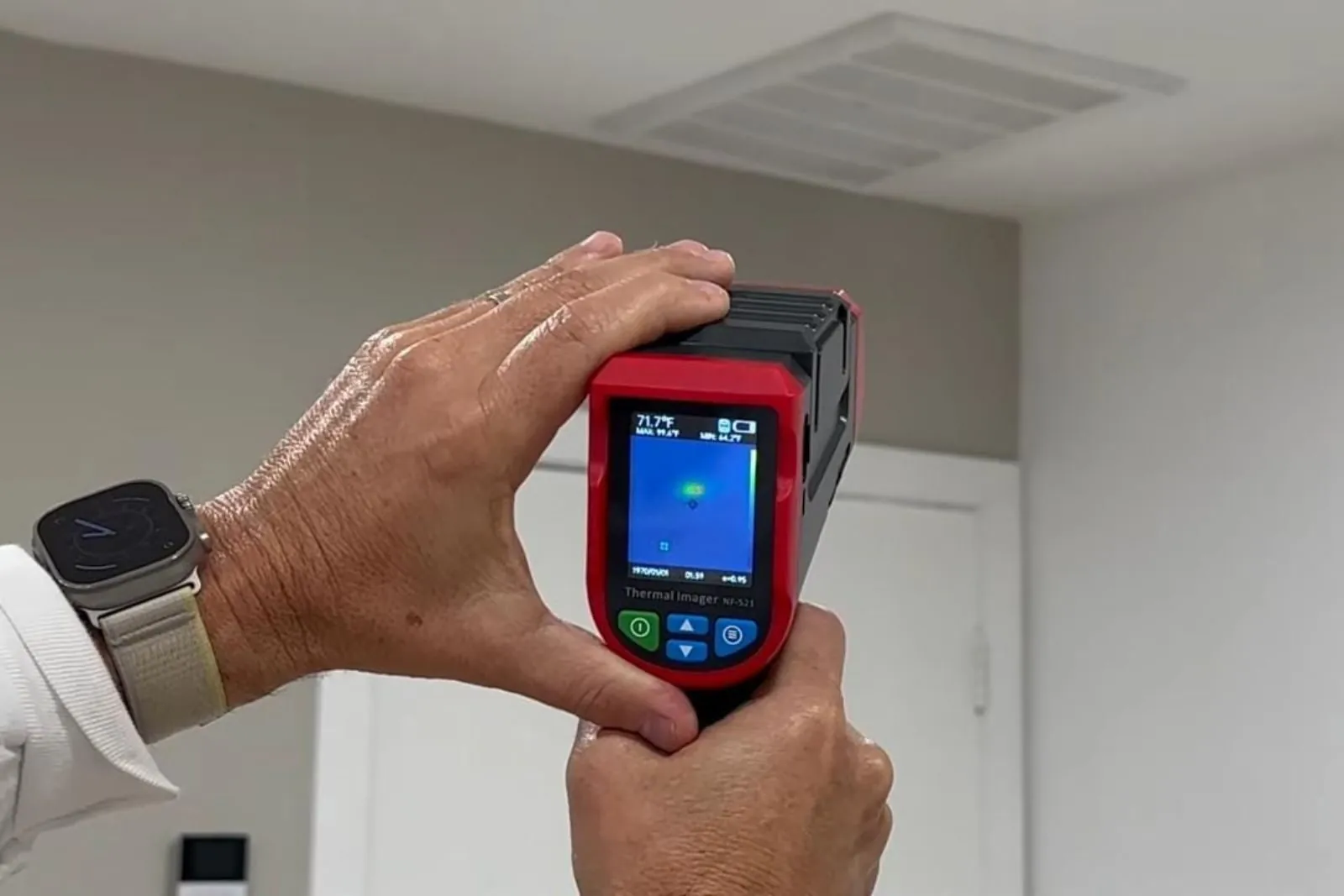
Leak detection finds the exact source of a hidden water leak without tearing open walls or floors. In Haverford, PA the plumber uses pressure tests, acoustic listening gear, thermal imaging and tracer methods to find leaks in supply lines, under slabs, behind walls and between the meter and the house.
Many calls start with a high water bill, a wet spot that appears from nowhere or a meter that keeps turning when every tap is off. This page also covers the water service line and meter, so high-bill calls land here.
When a hidden leak is an emergency
Water you can hear running but cannot see is the signal. A hissing wall, a ceiling stain that grows or a basement floor that is damp with no source all point to an active leak that is damaging the house.
Shut the main water valve and call the 24/7 line. The plumber will find the leak, tell you the options and, if a pipe has failed, fix it. Our burst pipe repair page covers the case where a pipe has already split.
How to check your meter for a leak
This test takes ten minutes and tells you whether to call.
- Turn everything offShut off all taps, the dishwasher, the washing machine and the ice maker.
- Read the meterFind the meter, usually near the street, in the basement or in a pit, and note the numbers or the small leak indicator.
- Wait fifteen minutesMake no water use at all during the wait.
- Check againIf the reading moved or the indicator spins, water is escaping somewhere between the meter and your fixtures.
Meter spinning with every tap off?
Call the 24/7 line. A locate is faster than guessing.
Where hidden leaks tend to be
Each location has its own signs and tools.
Supply line under a slab or floor
A warm spot on the floor, a hissing sound or a bill that jumps. Acoustic and thermal tools can find it.
In-wall pipe
A stain that appears and grows, or a musty smell. A moisture meter and thermal camera narrow the spot.
Water service line to the house
Wet ground, low pressure or a meter that turns with the house off. A pressure test and line tracing find it.
Fixture connections
A toilet fill valve, a supply line or a water heater fitting leaking slowly into a cabinet or floor.
Water service line and the meter
The water service line runs from the street connection to your house. Whether the water company or the owner is responsible for each part depends on your utility and the location of the shutoff and meter. Ask your water supplier where its responsibility ends, because the answer decides who fixes a leak.
We do not state who your utility is from memory, because water service in the Haverford area varies by street. Ask your plumber to confirm with your supplier before any digging begins, and call 811 first when excavation is involved.
Leak detection methods
A good plumber picks the least invasive tool that works.
| Method | What it finds | Good for |
|---|---|---|
| Pressure test | Whether a section of pipe holds pressure | Confirming a leak and isolating a zone |
| Acoustic listening | The sound of escaping water | Under slabs and in walls |
| Thermal imaging | Temperature differences from wet material | Hot water lines and radiant systems |
| Moisture meter | Wetness in drywall and wood | Finding the extent of the damage |
| Tracer gas | Gas escaping through a break | Hard-to-pin leaks in sealed lines |
Leak detection cost factors
Price depends on how hard the leak is to find.
What moves the price
Many homeowners policies cover the water damage from a sudden leak but not the pipe itself or long-term seepage. Ask your insurer, then call (610) 672-7601 for a price.
What to do while you wait for the leak plumber
If water is actively damaging the house, shut the main valve and keep it closed. Turn off electricity to wet rooms only if the panel is dry and you can reach it safely. Move rugs and valuables out of the area.
If the leak is slow, leave the main on but take a meter reading now and another in an hour. The difference tells the plumber how much water is escaping.
Test methods behind a good locate
A pressure test follows a simple rule: the line is filled, isolated and watched for a drop. The International Plumbing Code, or IPC, describes water pressure testing for new work, and detection plumbers borrow the same method to confirm leaks.
Ask for the pressure reading before and after the repair, so you know the line holds.
After the leak is found
Finding the leak is the first half. The second half is a repair that matches the pipe: a spot fix, a section replaced or, if the pipe is failing everywhere, a bigger discussion about repiping. A plumber should show you the evidence and mark where the problem sits.
If your leak damaged a basement or crawlspace, ask about drying and mold. We do not do remediation, but we can tell you when to bring in a specialist. For a leak at the toilet or faucet, see toilet repair and faucet repair.
Questions we hear most
Yes. The 24/7 line takes leak calls at any hour. If water is actively damaging the house, shut the main valve and call right away.
A water bill that rises with no change in habits, a meter that moves with all taps off, damp spots, a musty smell or the sound of running water all point to a leak.
Usually yes. Acoustic, thermal and pressure methods locate the leak, and only the exact spot needs opening.
Yes. We test the line between the meter and the house, then check fixtures. If the leak is on the utility side, we tell you so you can contact your water supplier.
Often yes, because water can undermine the floor and run up a high bill. Shut the main and call. If you are unsure, call and describe what you see.
Some policies cover access and detection when there is covered damage. Others do not. Ask your agent and keep photos and your invoice.