
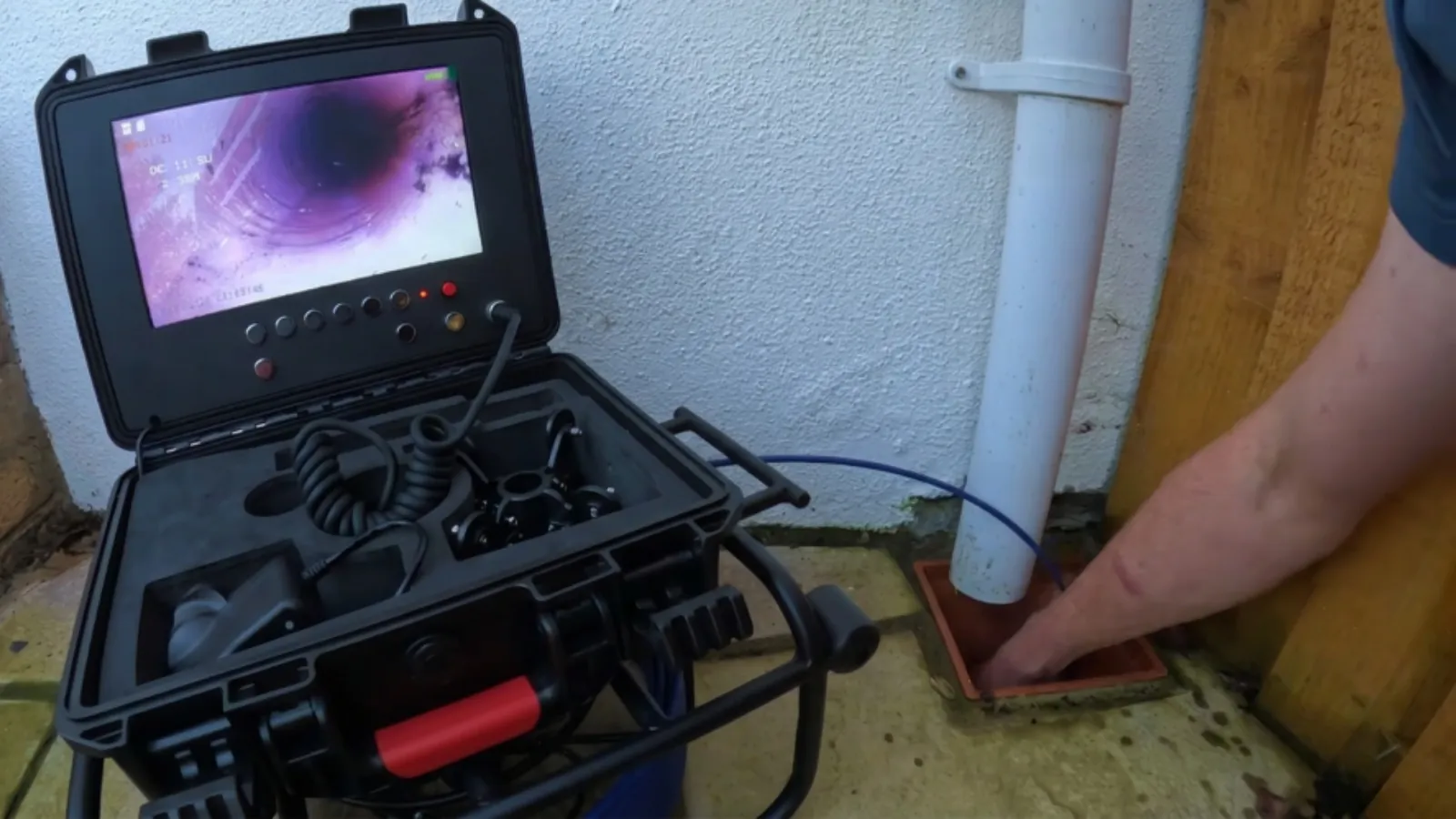
What a sewer camera inspection shows
A sewer camera inspection sends a waterproof camera on a flexible rod through your drain line and records what the pipe looks like inside. In Haverford, PA it is how a plumber confirms roots, cracks, bellies and breaks before anyone suggests a repair.
This is a planned service as often as an emergency one. Homeowners schedule it before buying a house, after a clog that keeps returning or when they want proof before paying for a repair.
When to schedule a camera inspection
The best times to look are before a purchase, after the second clog in a year, when a smell or soft ground appears outside and when a repair quote seems expensive. A camera turns a guess into evidence.
If sewage is already backing up, call the 24/7 line instead. The plumber clears the stoppage first and runs the camera as part of the visit, and the inspection becomes the first step of a repair.
How the inspection runs
A good inspection is more than a short video.
- Locate accessThe plumber finds a cleanout or pulls a toilet so the camera can enter the lateral.
- Run and recordThe camera travels toward the street while the plumber watches the screen and records footage.
- Mark the problemA locator on the camera head shows depth and position above ground, so any damage can be marked in the yard.
- Review with youYou see the footage and hear what is minor, what is serious and what can wait.
Buying a house in Haverford?
A camera look at the lateral before closing can save a surprise later.
What the footage can reveal
Each finding means something different for cost and urgency.
| What you see | Likely cause | Typical next step |
|---|---|---|
| Fine roots at a joint | Small gap in the pipe joint | Cleaning now, lining or repair if they return |
| Standing water in a section | Belly or low spot | Monitor, clean regularly or repair the section |
| Crack or break | Age, shifting soil or damage | Spot repair, lining or replacement |
| Offset joint | Pipe sections have separated | Repair or replace the offset section |
Haverford homes and the lateral question
Haverford Township's code treats the sewer service lateral as the customer's property. That means a buyer who inherits a cracked lateral inherits the repair bill, and the Township notes that sewer backup is excluded from standard homeowners policies unless an endorsement is added.
For that reason a camera look before closing is worth considering for any older house in Havertown, Brookline, Oakmont or Manoa. Ask the seller's agent whether a recent inspection exists, and ask your insurance agent about sewer backup coverage at the same time.
What an inspection does not tell you
A camera sees the inside of the pipe it can reach. It cannot tell you the soil outside, and it cannot go past a collapsed section. Some rods cannot turn sharp corners or enter through small cleanouts, so reach has limits.
A good report says how far the camera went and why it stopped. If it stopped early, ask what that means and what the next option is, such as access from another point.
Camera inspection cost factors
Pricing depends on the access and the report you want.
What moves the price
Inspections done for a home purchase are an out-of-pocket cost, and a repair they reveal is often too. Call (610) 672-7601 for a price based on your house.
Next steps once you have footage
If the footage is clean, you leave with evidence and a note of the pipe's age in hand. If it shows roots, schedule sewer line cleaning or hydro jetting. If it shows damage, the sewer line repair page explains the options.
The same camera can check branch drains too, such as a kitchen line that runs under a slab or a basement floor drain. Mention any drain that has given you trouble, and the plumber can include it.
Questions we hear most
A straightforward lateral often takes under an hour, plus time to review the footage with you. Dirty lines, long runs and extra drains add time.
Ask when you book. Recorded footage is the useful kind, because you can show it to another plumber, an insurer or a home inspector.
It is a smart check for any older house, especially because the Township treats the sewer lateral as the owner's property. Inspection is your decision, not a requirement we impose.
It can show a crack or a joint that is open, and a locator can mark the spot. It does not detect water leaks in supply pipes, which is the job of leak detection.
Not until it is cleared. The plumber clears the stoppage first, then runs the camera.
Usually it is planned. If you have a backup right now, call the 24/7 line and the camera becomes part of the repair visit.