
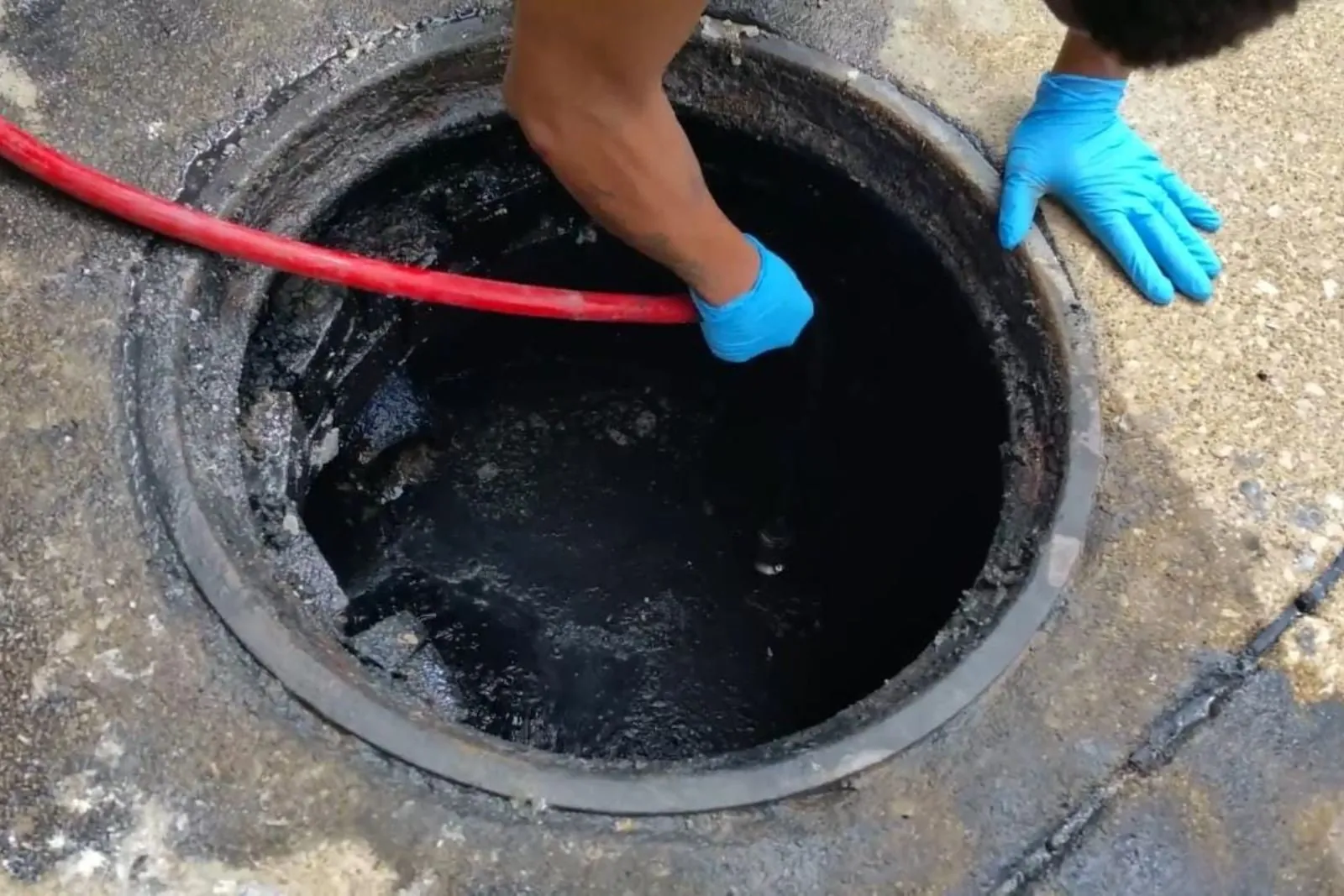
Emergency hydro jetting for lines a cable cannot clear
Hydro jetting uses a hose and a nozzle to blast water against the inside wall of a pipe, scouring away grease, scale, soap and fine roots that a cable leaves behind. In Haverford, PA it is the call when a drain has been snaked more than once and keeps coming back.
A jet does not fix a broken pipe, and it is not the first tool for every clog. It is the right one when the pipe is intact but coated, and it is the right emergency choice when a main line is so full of buildup that a cable only punches a small hole.
When a stopped line is an emergency
A main line that is fully stopped sends wastewater to the lowest point in the house. In a basement with a floor drain, that can mean sewage within minutes of a flush or a washing machine cycle.
Call the 24/7 line first and stop using water. The plumber confirms the blockage with a camera, decides whether a jet or a cable is the better first move and gives you a price before work starts. If a jet is chosen, the line is flushed until the camera shows clean pipe wall.
Signs a cable alone has not solved it
Callers often tell us the same story, and it points to jetting.
They snaked it and it came back
A cable cuts a hole through a clog and leaves the coating. Within weeks the hole narrows and the line clogs again.
The line stops at the same spot
A cable that sticks at a set distance suggests roots or a heavy scale ring. A jet with the right nozzle can cut through it.
Slow drains across the house
Several fixtures slowing together point to a coated main, which is a jetting job more than a spot clog.
A restaurant or shop grease line
Grease hardens into a ring that only pressure and heat will remove, a pattern covered under our commercial plumbing page.
Line stopped and backing up?
Call the 24/7 line. The plumber confirms the blockage on camera.
Jetting compared with cabling
The two methods often work together. This table shows how they differ.
| Question | Cable machine | Hydro jet |
|---|---|---|
| How it cleans | Cutter head chews through the blockage | Water pressure scours the whole pipe wall |
| Best for | A solid plug, such as roots or a toy | Grease, scale and soap film |
| Pipe condition needed | Works on weak or older pipe with care | Pipe should be intact and free of major cracks |
| Typical result | Quick relief for a fresh clog | Longer gap before the next clog |
A responsible plumber will camera the line before and after a jet. If the footage shows a crack or a break, jetting stops and a repair discussion starts, which is where sewer line repair comes in.
Why old Haverford pipe makes jetting more useful
Neighborhoods like Brookline, Beechwood and Llanerch began as early developments, and older lines in a township like this often have rough interiors. Rough pipe wall holds grease and mineral scale far better than smooth new plastic, so a cable's channel closes quickly.
That is not a diagnosis of your house. Some old lines are in good shape and some newer ones are not. Ask the plumber to show you the camera footage so you can see for yourself what the pipe looks like.
Remember that sewer laterals are the customer's responsibility under the Haverford Township Code. A jet that clears your lateral before it fails costs less than a flooded basement that insurance may not cover.
When jetting is the wrong choice
Jetting is not a cure-all. A line with a collapsed section, a large offset joint or an active crack should not be pressurized, because water can erode the soil around a break or push debris out into the yard.
In those cases the plumber will recommend a spot repair or lining after a camera inspection, and you will see the footage first. Our page on sewer camera inspection shows what the plumber looks for.
What affects the price of hydro jetting
Jetting is priced by the job, because every line is different.
What moves the price
Most homeowners policies do not pay for routine line cleaning, and Haverford Township notes that sewer backup is an add-on coverage. Call (610) 672-7601 for a price that reflects your line before any work begins.
What the plumbing code says about pipe condition
The International Plumbing Code, or IPC, expects drain pipe to be sound and properly supported. A jet is a cleaning tool, not a repair, and a pipe that cannot take pressure needs repair first.
That is why a camera check before and after belongs in any jetting visit.
What to expect after a jet
A good jet leaves the line carrying water freely and the camera showing clean walls. Expect the plumber to flush every fixture on the line and to explain what the footage showed.
Plan on a lighter routine afterward. Keep grease out of the kitchen sink, use a strainer in tubs and avoid flushing wipes marked flushable. If you want a regular rhythm, ask the plumber how long the pipe condition suggests, and for a basic option see drain cleaning. For commercial kitchens, the commercial plumbing page explains the schedule.
Questions we hear most
Yes. The 24/7 line takes jetting and backup calls at any hour. The plumber starts with a camera and a cable if that is the faster way to restore flow, and a jet follows when the pipe needs a full scouring.
On sound pipe, a properly set jet is safe. On a cracked, collapsed or badly corroded line it can make damage worse, which is why a camera look comes first.
There is no fixed schedule. Lines with a history of grease or roots may benefit from periodic cleaning, while a clean line may never need it. A camera tells you more than a calendar.
A jet with a root-cutting nozzle can clear fine roots, and a cable cutter handles thicker ones. Roots grow back unless the entry point is repaired.
Neither is better in every case. Snaking opens a channel fast, and jetting cleans the pipe wall. Plumbers often start with one and finish with the other.
If the line is intact, yes. The jet clears the buildup that causes the floor drain to rise. If the camera shows damage, a repair plan is needed as well.