
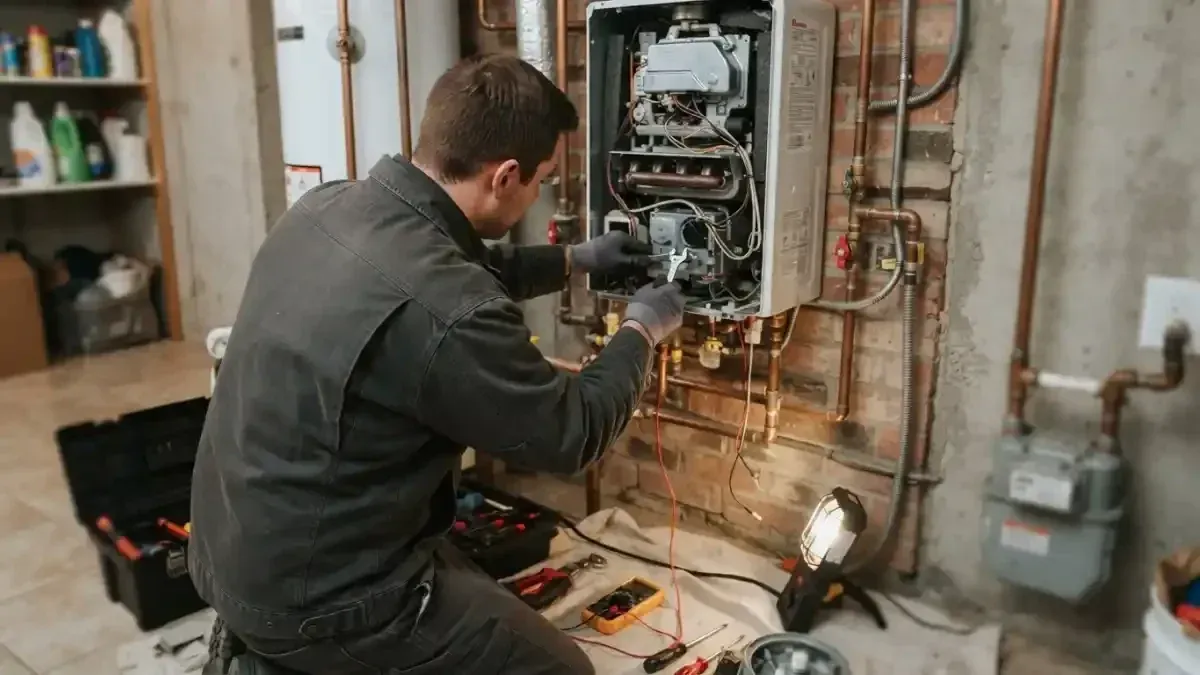
Boiler repair in Haverford, PA
A boiler heats water or makes steam and sends it to radiators, baseboard or in-floor loops. In Haverford, PA many older houses still heat with a boiler, and the plumber repairs leaks, failed pumps, faulty valves and ignition problems.
Boiler work is a heating job as much as a plumbing job. This page covers the plumbing side: leaks, pressure, circulators and the safety checks that come first.
When a boiler problem is urgent
A boiler leaking water, a pressure gauge in the red, a smell of gas or a house with no heat in winter all call for fast action. Gas smell is a leave-the-house problem. The others need a plumber soon.
If you smell gas, leave the building and call the gas utility from outside. For no heat or a leak, switch the boiler off and call the line. Boilers are non-emergency for most repairs, but a leaking boiler can flood a basement quickly.
Symptoms and common causes
Different signs point to different parts.
| Symptom | Likely cause | Typical fix |
|---|---|---|
| No heat, boiler off | Failed ignition, thermostat or circulator | Replace the part |
| Radiators cold at the top | Air in the system | Bleed the radiators |
| Banging or kettle noises | Scale, low water or air | Flush, repair or replace |
| Water on the floor | Leaking valve, fitting or boiler body | Fix the leak or plan replacement |
| Pressure too high or low | Expansion tank or fill valve failure | Replace the part |
No heat or a leaking boiler?
Call. We diagnose and repair the plumbing side.
Boiler age and when to stop repairing
Boilers can last a long time when maintained, but parts wear out and replacements get harder to find. A repair on a boiler near the end of its life may only delay the larger cost.
Ask the plumber for both numbers, repair and replacement. If the boiler leaks from the body or the heat exchanger, it is generally time to replace. See water heater installation for the nearby water heating work.
Safe checks to do before you call
Simple steps that do not involve opening the boiler.
- Check the thermostatMake sure it is set to heat and the temperature is above the room.
- Check the pressure gaugeA normal cold reading is usually in a manufacturer-set range. Low or very high numbers should be reported to the plumber.
- Look for leaksCheck pipes, valves and the base of the boiler for water or rust.
- Check the power switch and breakerBoilers have their own switch, often on the wall near the unit.
Boiler repair cost factors
Cost depends on the part and the access.
What moves the price
Boiler repairs are normally a homeowner expense. A sudden leak that damages the house may be an insurance claim. Call (610) 672-7601 for a price before work begins.
What to tell the plumber when you call
Say whether the boiler runs at all, what the thermostat says and whether any radiators are warm. Mention any noises, leaks or smells and the age of the unit if you know it.
Photograph the pressure gauge and the label on the boiler. That information lets the plumber arrive with likely parts and cuts the time you spend in a cold house.
Where boiler work meets code
Relief valves, discharge piping and expansion tanks on a boiler are addressed by mechanical and plumbing codes. Pennsylvania's Uniform Construction Code draws on the International Code Council's model codes, including the International Plumbing Code, or IPC.
We say plainly when a job moves into heating work that needs a heating specialist. For the plumbing side, ask what permit applies and who pulls it.
Maintenance that prevents breakdowns
A yearly service visit catches worn parts before the first cold night. The plumber checks the water level, the pressure, the safety valve, the circulator and the venting.
Keep the area around the boiler clear, keep a carbon monoxide alarm nearby and bleed radiators each fall. If you have a leak that is not the boiler itself, see leak detection. For frozen pipes in the cold, see burst pipe repair.
Questions we hear most
Plumbing-side boiler problems such as leaks can be handled by calling the 24/7 line. We say plainly when a job needs a heating specialist.
Air is trapped in the system. Bleeding the radiators often fixes it.
A faulty fill valve or expansion tank is a common cause. Have it checked, since high pressure can trip the relief valve.
Water can damage the floor and corrode parts. If you also smell gas, leave the house and call the gas utility.
Yearly service is the usual recommendation. The visit catches small problems before the cold season.
If the boiler leaks from the body, needs frequent repair or is very old, replacement is usually the better choice. The plumber gives you both prices.