
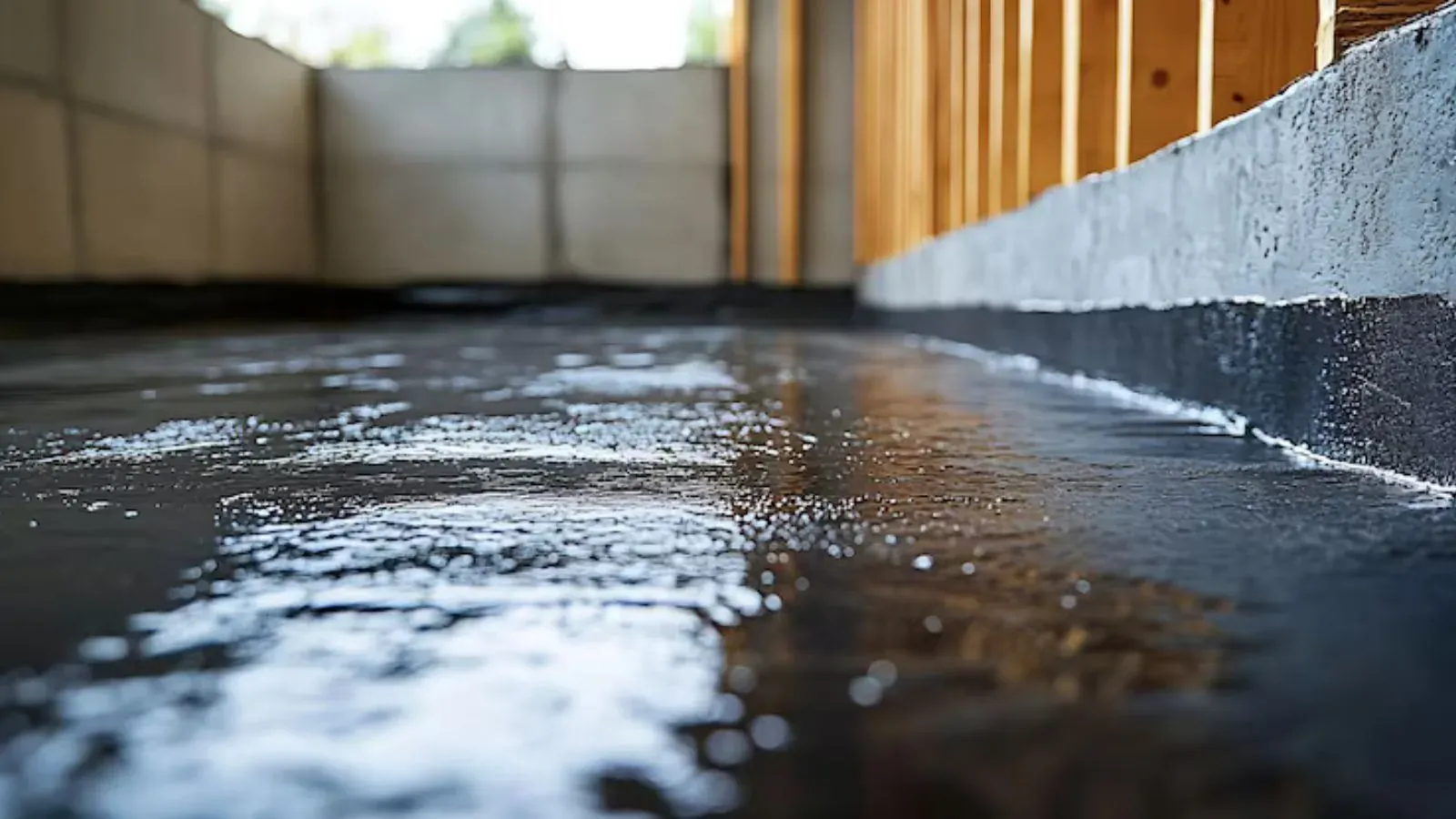
Basement waterproofing in Haverford, PA
Basement waterproofing keeps groundwater, seepage and condensation out of the lowest level of your house. In Haverford, PA the plumber looks at the source first, then recommends drainage, a sump system, crack repair or exterior fixes that match what is actually happening.
This page covers the common causes of a wet basement, the options that work and the quick fixes that do not. If your basement is flooding right now, call the 24/7 line and see sump pump repair.
Find the water source before paying for a fix
A wet basement has several possible causes, and the wrong fix wastes money. Water can come through floor cracks, wall seams, the floor-to-wall joint, window wells, a failed pipe or a drain line that backs up.
A simple test is to tape a square of plastic wrap to a dry wall or floor for two days. Moisture on the outside of the plastic is condensation from the air. Moisture underneath is coming through the masonry.
Causes and fixes
Each cause has a different answer.
| Cause | Sign | Usual fix |
|---|---|---|
| Poor grading or gutters | Water near the walls after rain | Regrade, extend downspouts and fix gutters |
| Hydrostatic pressure | Seepage at the floor joint | Interior drain tile and a sump pump |
| Cracks in the wall or floor | Visible leaks along a crack | Seal the crack, treat the cause |
| Window well flooding | Water below a window | Clean the well and add drainage |
| Plumbing leak | Damp spot with no rain | Find and fix the pipe |
A plumber is the right first call when water might be from a pipe or a drain. A pipe leak looks like a waterproofing problem until someone tests it, and leak detection rules it out.
Wet basement and not sure why?
Call. We find the source before we price a fix.
Interior drain systems and sumps
An interior drain system collects water at the floor-wall joint and sends it to a sump pit, where a pump moves it out. It is a common fix for seepage from rising groundwater, and it can be done without digging up the yard.
The pump is the critical part. A system with a weak pump or no backup can fail the first time the power goes out. Read the sump pump repair page for pump types and backups.
Exterior fixes that cost little
Many wet basements are helped by cheaper steps outside. Gutters that overflow, downspouts that empty by the foundation and soil that slopes toward the house all send water to the wall.
Extend downspouts several feet away, clean gutters and check that the soil slopes away from the foundation. These steps do not fix every problem, but they remove a common cause for little cost.
What not to buy first
Some products promise more than they deliver.
Waterproof paint alone
It can hide dampness for a short time but does not stop water under pressure.
Crack sealant with no drainage plan
A sealed crack can open again if the cause is groundwater pressure.
A dehumidifier for a leak
It helps with humidity but cannot keep up with a steady seep.
A quote with no inspection
A price given over the phone cannot account for the cause.
Waterproofing cost factors
Price depends on the size of the problem and the fix.
What moves the price
Basement water from seepage is often not covered by standard homeowners insurance, and Haverford Township says sewer and sump coverage is an add-on. Call (610) 672-7601 for an inspection and a written price.
Codes that touch drainage and sumps
Sump pits, discharge pipes and backwater valves fall under the plumbing code, including the International Plumbing Code, or IPC, as adopted locally. Pumps and outlets near them fall under the National Electrical Code, or NEC.
A permit may be required for a new system. Ask the Building and Codes Department at 610-446-1000 before work starts.
Humidity, mold and what a plumber does and does not do
A damp basement can grow mold on walls, boxes and stored items. A plumber fixes water entry and the pumps and pipes that handle it. Mold remediation is a specialist trade, and we say when to call one.
Cut down on moisture by running a dehumidifier, venting dryers outdoors and keeping stored items off the floor. If you smell mold or see growth over a large area, bring in a specialist.
Questions we hear most
Yes. If water is entering the basement now, call the 24/7 line. The plumber checks pumps, drains and pipes and stops what can be stopped.
A leak that appears only after rain points to groundwater. A leak that appears when no rain has fallen, or that follows a pipe, points to plumbing.
Paint can help with minor dampness but does not stop seepage under pressure. A drainage fix is the lasting answer.
Often not. Standard policies usually exclude groundwater seepage, and sump and sewer backup coverage is an add-on. Check your policy.
Many interior drain systems do, because the pump moves the water out. Some houses can be solved with exterior grading alone.
No. We handle the water source. If there is mold, a specialist can handle it.