
Emergency sump pump repair in Haverford
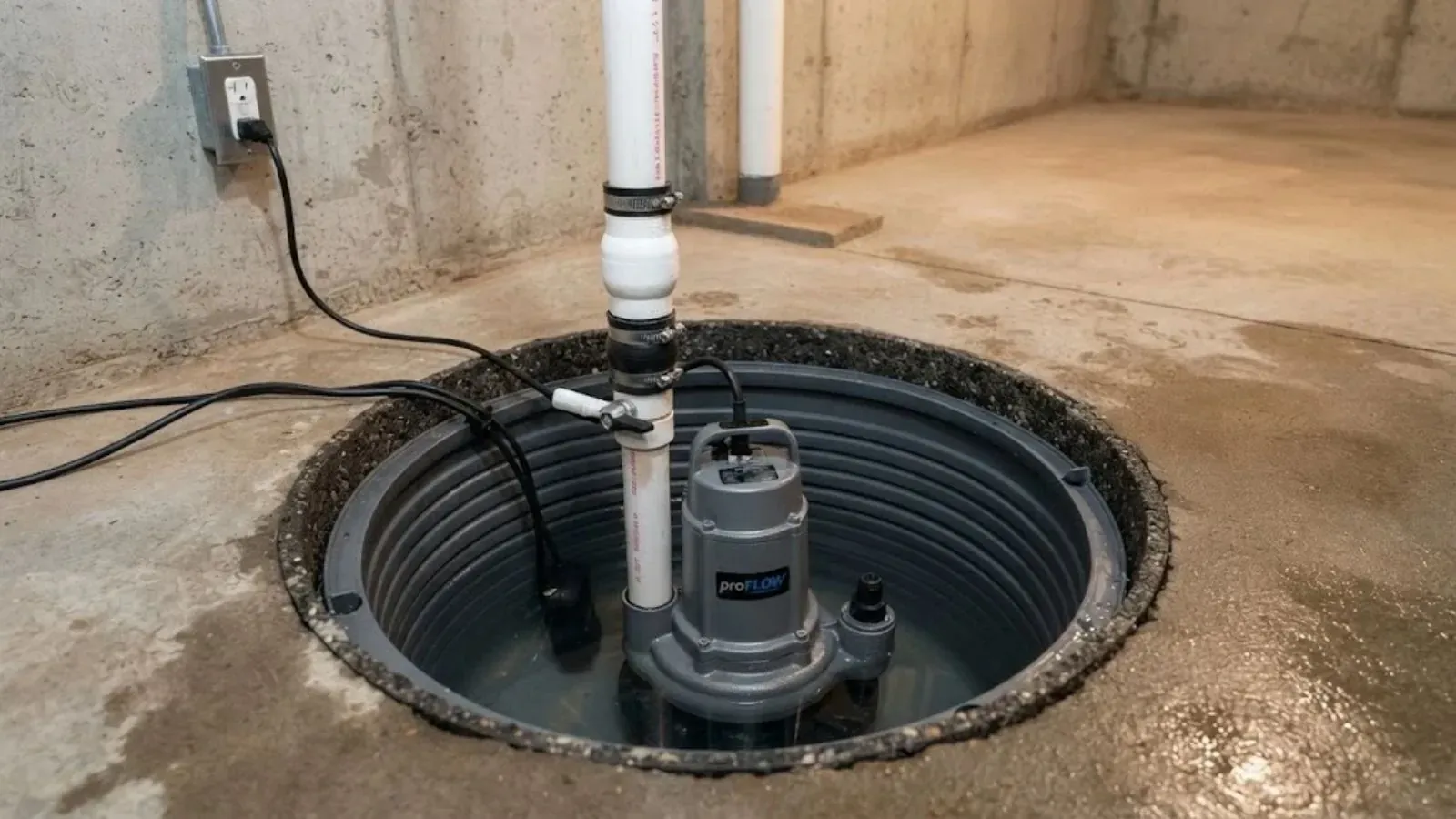
A sump pump moves groundwater out of a basement pit before it can flood the floor. In Haverford, PA the plumber repairs pumps, replaces failed floats and check valves, installs new pumps and adds battery backups so a storm and a power outage do not arrive together.
This page covers the signs a pump is failing, what to do during a storm and how to prevent the next failure.
When a failed sump pump is an emergency
A pump that stops during heavy rain is the urgent case. Water can rise in the pit, spill onto the floor and reach finished space within an hour or two. A pump that runs constantly or cycles too often is a warning that a failure is on its way.
If your basement is already taking in water, call the 24/7 line. The plumber can often restore pumping the same visit, and a battery backup keeps it running when the power fails.
Storm checklist for a basement with a sump
Run these checks before the heavy rain, and again in the middle of it.
Check the pit
Look for a clean pit with water that is not touching the top of the basin.
Test the float
Pour water in until the pump starts and shuts off on its own.
Check the discharge
Make sure the pipe outside is clear, directs water away and is not frozen.
Know your backup
A battery or water-powered backup only helps if the battery is charged and tested.
Sump not pumping and rain coming down?
Call the 24/7 line now.
Why pumps fail
Most failures come from a short list of causes.
| Failure | Sign | Fix |
|---|---|---|
| Stuck float | Pump does not start or does not shut off | Clean or replace the float switch |
| Failed check valve | Pump runs and water falls back with a loud thump | Replace the check valve |
| Clogged intake | Weak flow or a hot motor | Clean the screen and the pit |
| Worn motor | Pump hums or trips the breaker | Replace the pump |
| Power loss | Pump quits in a storm | Add a battery backup |
What Haverford homes face
Haverford Township has creeks and low spots, and houses on lower ground or near drainage paths are the ones most likely to see water in the basement after heavy rain.
Not every house has a sump, and some houses have one that was installed long ago and never tested. The Township also states that its sewer and drain system liability is limited, and it directs homeowners to ask their insurers about sewer, drain and sump pump backup coverage. Check your policy before the next storm.
Pump types and backup options
Each type fits a different situation.
Submersible pump
Sits in the pit and runs quietly. Common in newer installs.
Pedestal pump
The motor sits above the pit. Easier to service, louder.
Battery backup
A second pump and a battery that run when power fails.
Water-powered backup
Uses water pressure to pump out. Needs a municipal supply and an outlet allowed by local rules.
Sump pump repair and install cost factors
Price depends on what the pump needs.
What moves the price
Insurance for sump failure is usually an endorsement, not part of a standard policy. Check yours, then call (610) 672-7601 for a price.
Rules around discharge and backwater protection
Where sump water may discharge, and how a backwater valve must be installed, depends on local rules and on the plumbing code. Pennsylvania's Uniform Construction Code draws on the International Code Council's International Plumbing Code, or IPC.
Do not tie a sump discharge into the sanitary sewer unless your township allows it. Ask the Building and Codes Department at 610-446-1000 before changing the discharge.
Prevention that keeps the basement dry
Test the pump twice a year and before major storms. Keep the pit clear of debris, make sure the discharge pipe empties away from the foundation and consider a battery backup if you finish your basement.
A wet basement is not always a sump problem. Gutters, grading and cracks all matter. See basement waterproofing for the long-term answers. If a pipe leak is the source, see leak detection.
Questions we hear most
Yes. The 24/7 line takes failed sump calls at any hour, including during storms.
Test it a couple of times a year and before heavy rain. Pour water into the pit until the float lifts and the pump starts.
Many last roughly 7 to 10 years, depending on use. A pump that runs often wears out sooner.
If your basement floods when the pump stops or if you have finished space, a backup is a smart addition. Power often fails during the storms when the pump is needed most.
Often not. Haverford Township's notice says sewer, drain and sump pump backup coverage is an add-on endorsement. Check your policy.
A high water table, a stuck float or a failed check valve are common causes. The plumber finds which.