
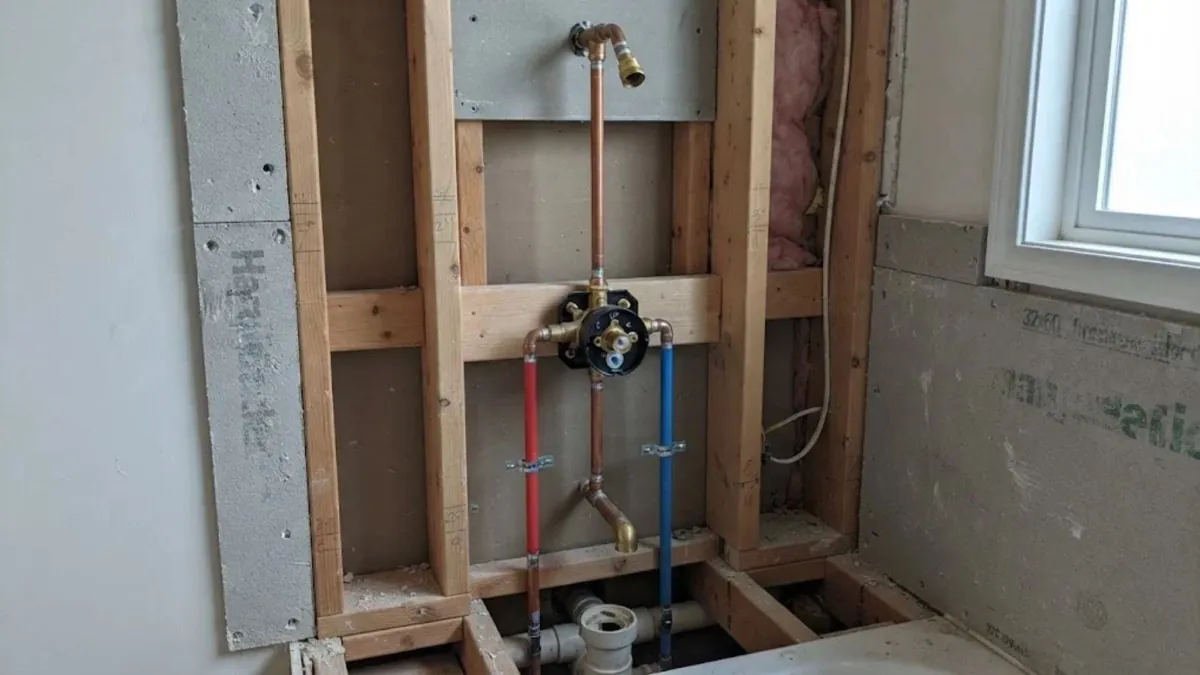
What shower plumbing involves
Installing shower plumbing means running hot and cold supply lines to a valve, adding a drain with a trap and vent, and connecting the showerhead. It is a rough-in job that happens before the walls and tile go up, and a mistake costs the most after they do.
This guide explains what each part does, what to decide early and where a Haverford homeowner can do the work and where a licensed plumber belongs.
The parts in order
A shower has four plumbing parts. The valve controls temperature and flow, the supply lines carry water to it, the showerhead delivers water and the drain takes it away. Each has rules about where it sits and how it connects.
The valve is the part to choose first, because its model decides the depth of the wall opening and the rough-in height. Buy the valve and trim kit before you open a wall, not after.
Decisions to make before you start
These choices are cheap before the walls close and expensive after.
Valve type
A pressure-balancing valve helps prevent scalding when someone flushes a toilet. A thermostatic valve holds a set temperature.
Showerhead height and arm
Mark the wall height first and plan the valve accordingly, usually near chest height.
Drain location and size
A standard shower drain often uses a 2-inch line. A trap and vent are required.
Access
A panel on the other side of the wall makes later valve service possible without breaking tile.
The rough-in sequence
This is the order a plumber follows.
- Shut off the water and planClose the main valve, drain the lines and mark where the valve, showerhead and drain will go.
- Run the supplyConnect hot and cold lines to the valve using the right pipe and fittings for your system.
- Install the drain and ventSet the drain with a trap and connect it to a vent so water drains smoothly.
- Pressure testTest the supply for leaks with the valve open before closing the wall.
- Inspection and finishIf a permit is required, the inspection happens now, then the wall and the trim go on.
Planning a new shower or bathroom?
Call to book a walk-through and a written scope.
DIY or plumber
Some of the work suits a skilled homeowner and some does not.
| Task | DIY friendly? | Why |
|---|---|---|
| Swapping a showerhead | Yes | No pipe work involved |
| Replacing a valve trim | Often yes | Keeps the valve body in place |
| Replacing a valve body | Plumber preferred | Needs soldering or fittings and a leak test |
| New shower drain and vent | Plumber | Drain slope, vent and code matter |
| New bathroom rough-in | Plumber | Permit and inspection typically needed |
Permits and licensing in Haverford Township
Haverford Township says plumbing work is performed by contractors licensed with the Township and is inspected for compliance with the Pennsylvania Uniform Construction Code. The Building and Codes Department at 610-446-1000 handles permit questions, so call before you open a wall.
Parts of the surrounding area sit in other townships with their own offices. If your bathroom is in a Lower Merion or Upper Darby address, ask that municipality. Do not assume the rules next door match yours.
Water pressure, hot water and scald safety
A shower that runs hot and cold when another fixture is used usually has a balancing issue. A new valve with pressure balancing solves that. Check your water heater setting too, since many safety groups suggest about 120 degrees Fahrenheit.
Low flow can come from a clogged showerhead or from corroded supply lines. If the whole house is low, the cause is bigger. See repiping for aging supply lines.
Waterproofing and the part plumbers do not control
The plumber installs the valve, supply and drain, but a shower only stays dry if the wall and pan are waterproofed correctly. A shower pan, membrane and sealed seams are the work of the tile setter, and a plumber should test the drain before the pan goes in.
Ask who is responsible for each layer before the job starts. A written order of work, from rough-in to test to waterproofing to tile, keeps one trade from covering up another's mistake.
Tub and shower combinations
A tub and shower share one valve and a diverter that switches water between the spout and the showerhead. The tub also needs an overflow and a drain that connect to the same trap. These parts must be installed together and tested before the wall closes.
If you are replacing an old tub with a shower, the existing drain may sit in the wrong place for the new pan. The plumber checks this at the walk-through, since moving a drain means opening the floor.
A checklist for the walk-through
Have the valve and trim model ready, a drawing or a photo of the space and a list of what you want, including any handheld sprayer or body jets. Note where the main shutoff is and whether you have access below the floor.
A written scope should name the valve, the drain type, the pipe material, the permit and who handles patching. If any of those lines is missing, ask before you sign.
What the plumbing code asks of a shower
The International Plumbing Code, or IPC, sets rules for shower valves that limit scalding, for drain trap sizing and for venting. Pennsylvania's Uniform Construction Code draws on those model codes.
That is why a balanced or thermostatic valve and a properly vented trap are standard on a permitted job. Ask your plumber which parts are required for your shower.
What the finished job should look like
A good install has a valve centered and level, trim that sits flat to the wall, a drain that empties without pooling and no drips from the showerhead. The plumber should test it with the wall open and leave you with the model numbers of the valve.
Keep the valve model information in a safe place. If the cartridge needs replacing in ten years, the right part depends on it. For a new bathroom or a remodel, see plumbing installation. We also serve Bryn Mawr and Broomall remodels.
Questions Haverford homeowners ask
Simple swaps like a showerhead or valve trim are manageable. A new valve body, drain and vent are better left to a licensed plumber because mistakes are hidden in the wall.
Often yes for new rough-in work. Call the Building and Codes Department at 610-446-1000 or ask your plumber to confirm.
It keeps the temperature steady when pressure changes elsewhere, such as when a toilet flushes.
It depends on the valve model, which is why you should buy it before you open the wall. The instructions give the rough-in depth.
A single shower rough-in can take a day, with time added for inspection and finish work.