
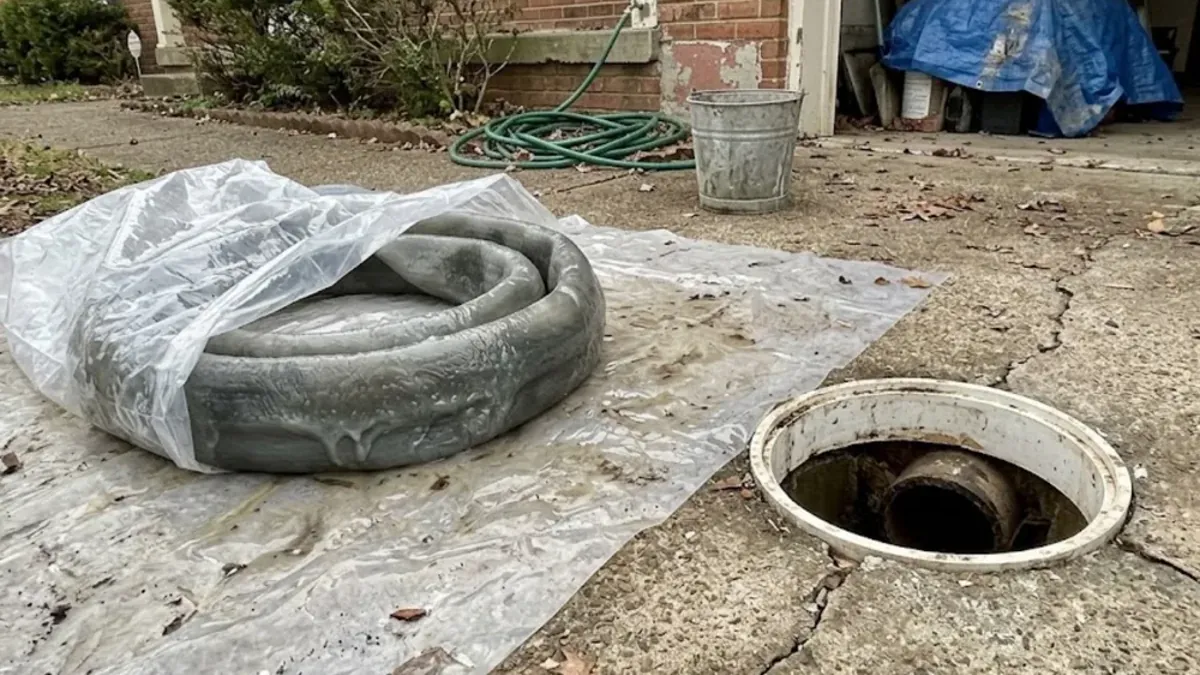
What pipe lining repair is and when it fits
Pipe lining repairs a damaged sewer pipe from the inside. A resin-soaked liner is pulled into the old pipe and cured, forming a new smooth pipe inside the old one. It works best when the existing pipe is still round and the damage is cracks, root intrusion or failing joints.
It is not the answer to every sewer problem. This guide explains how lining works, what it cannot fix and the questions to ask before you agree to it in Haverford, PA.
How the lining process works
The plumber first cleans the pipe and inspects it with a camera, since the liner has to fit a clear, round path. A liner is soaked in resin, pulled or inverted into place and then cured with steam, hot water or light. The cured liner seals cracks and blocks roots.
A final camera pass confirms the liner is smooth and the lateral connections are open. Many jobs can be done through an existing cleanout, which avoids digging up the yard.
Lining compared with other repairs
Pick the method that fits the pipe.
| Repair | Best for | Limit |
|---|---|---|
| Spot repair | One short crack or offset | Needs a hole at that spot |
| Pipe lining | A run with cracks and joint damage | Pipe must be round and clear |
| Pipe bursting | A badly failing pipe | Needs access pits at each end |
| Open trench replacement | A collapsed or crushed section | Digging and surface repair |
Camera showed cracks or roots?
Call to talk through lining and other options.
Questions to ask before agreeing to a liner
A good plumber has answers to each.
What does the camera show?
Ask to see the footage and where the damage sits.
Is the pipe round and continuous?
A collapsed or badly offset pipe cannot take a liner.
How is the liner connected to the lateral?
Branch connections must be reopened and sealed.
What is the warranty and who stands behind it?
Get it in writing, and ask what it covers.
Haverford Township rules that shape a lining job
Haverford Township Code treats the sewer service lateral as the property of the customer, so a lining job is a private repair the owner arranges and pays for. The Township also says plumbing work is performed by contractors licensed with the Township and inspected under the Pennsylvania Uniform Construction Code.
Ask the Building and Codes Department at 610-446-1000 whether your repair needs a permit, and call 811 before any digging for access pits. Keep the before and after footage with your house records.
What lining does not fix
Lining does not repair a collapsed pipe, a major belly that holds water or a severe offset. It also slightly reduces the pipe diameter, which is normally acceptable but worth discussing for a small line.
If the pipe cannot take a liner, the plumber will discuss spot repair or replacement. See sewer line repair for those options, and sewer camera inspection for how the diagnosis is made.
Clean first, line second
A pipe has to be clean before it can be lined, and cleaning often reveals more about its condition. Roots are cut out, scale is scoured away and the camera then shows what is left.
That is why the order is clean, inspect and decide. A plumber who proposes a liner without cleaning and filming is guessing. See hydro jetting for the cleaning step. We serve Bryn Mawr and Wynnewood too, where mature trees make roots a common reason to consider lining.
Reading the camera footage before a liner
Ask the plumber to point out cracks, offsets, roots and any low spots. A liner can handle cracks, small offsets and root intrusion, but a pipe with a belly will still hold water after lining because the liner follows the old shape.
Take a picture of the screen or ask for a copy of the footage. You want a record of the pipe before, so you can compare it with the footage after the liner is cured.
Lateral connections and cleanouts
Branch connections, such as a pipe from a second bathroom, must be reopened after the liner cures. A skilled crew cuts them out from inside with a robotic cutter and confirms them on camera.
A cleanout at the house makes the job simpler. If you have none, the plumber may install one as part of the work, which is also a good addition for future maintenance.
Questions about warranty and who does the work
Ask who does the lining, whether the plumber uses their own crew or a subcontractor and what the warranty covers. Ask whether it is transferable if you sell the house.
Get the warranty and the footage in writing and keep both with the house records. A future buyer or inspector will appreciate having them.
Lining and the rest of the system
A liner fixes one pipe. If other parts of the line, such as a cleanout, a branch or a connection at the street, are failing, the problem may return. The camera pass before the job should look at the entire lateral, not just the damaged section.
Ask the plumber to list every defect on the footage and explain which ones the liner solves and which it does not. A complete picture keeps you from paying twice.
Product standards for liners
Cured-in-place pipe liners are made to published ASTM standards, such as ASTM F1216 for the inversion method. Ask the contractor which standard their product meets and which wall thickness they plan for your pipe.
A real answer to that question is a good sign. Vague language about advanced technology is not.
What to expect after the lining
You should be able to use the plumbing again within hours of the cure, depending on the method. Keep a copy of the footage and the warranty. Do not flush wipes or pour grease, since those still clog a lined pipe.
If the line keeps clogging despite a liner, the cause may be a belly or a shared section that was not part of the job. A follow-up camera pass tells you.
Questions Haverford homeowners ask
Manufacturers often describe a long service life, but the answer depends on the product and installation. Ask for the warranty terms in writing.
Often yes, if the pipe is clear and round. Heavy scale must be removed first.
Yes. A liner stops roots and leaks. It does not stop grease or wipes from collecting.
Ask the Building and Codes Department at 610-446-1000. Requirements depend on the work and the access.
Often it costs less in surface restoration, but the answer depends on the pipe. The plumber gives you options and prices.