
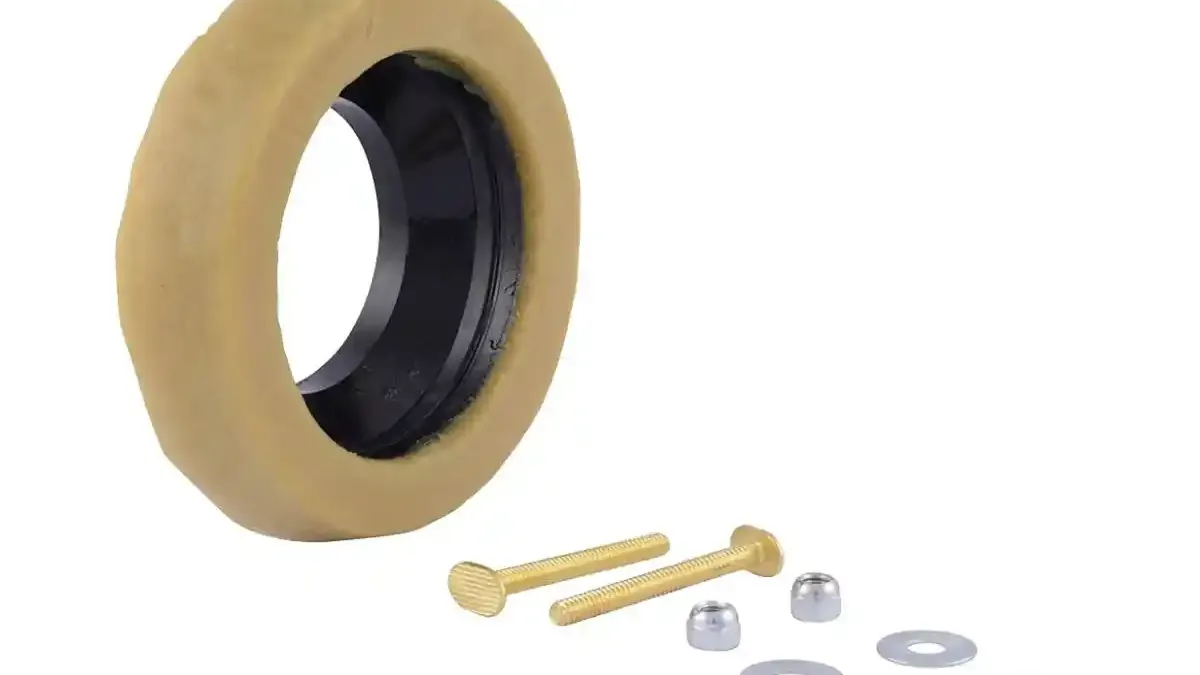
The short answer: how a wax ring gets replaced
To replace a toilet wax ring, shut off the water, drain the toilet and disconnect the supply. Unbolt the base, lift the toilet off and scrape the old wax from the flange. Then set a new ring, lower the toilet straight down and bolt it in. The job takes about an hour and a half for a first-timer.
Most Haverford homeowners do it after they see water around the base, smell sewer gas or feel the toilet rock. If the floor around the toilet is soft or the flange is broken, stop and call a plumber, because the wax ring is not the real problem.
Signs the wax ring has failed
The wax ring seals the joint between the toilet and the drain flange. When it fails, water or sewer gas escapes at the base. The signs are easy to spot once you know them.
Look for water around the base after a flush, a damp or stained floor, a toilet that rocks or a sewer smell in the bathroom. A slow leak can rot the subfloor for months before anyone sees it, so check around the base with a dry paper towel.
Tools and parts to gather first
Having everything in reach saves a messy trip to the hardware store halfway through.
A new wax ring
Choose one sized for your drain. A thicker ring helps if the flange sits slightly low, and a wax-free ring is an option if you prefer.
New closet bolts
Old bolts are often rusted. New ones cost little and make the job easier.
Putty knife and rags
To scrape off old wax and wipe the flange clean.
A bucket and sponge
To drain the tank and bowl and soak up leftover water.
Step by step
Take your time, and keep the toilet upright when you lift it.
- Shut off and drainClose the supply valve behind the toilet, flush, and sponge out the remaining water from the tank and bowl.
- Disconnect the supplyUnscrew the supply line from the bottom of the tank. Keep a towel under the connection.
- Remove the nuts and liftPry off the caps, unscrew the nuts from the closet bolts and lift the toilet straight up. It is heavy, so ask for help.
- Clean the flangeScrape off all of the old wax. Check the flange for cracks and make sure it sits level with or slightly above the floor.
- Set the new ring and lower the toiletPlace the ring on the flange or on the toilet horn, line up the bolts and lower the toilet straight down. Press down firmly with your weight.
- Bolt, reconnect and testTighten the nuts alternately a little at a time, since overtightening cracks the base. Reconnect the supply, open the valve and flush several times, checking for leaks.
Not sure what you will find under the toilet?
Call. A plumber can reset the toilet and check the flange in one visit.
What you find under the toilet and what it means
The flange condition decides whether this is a one-hour job.
| What you see | What it means | What to do |
|---|---|---|
| Clean flange, level with floor | A normal wax ring failure | Replace the ring and reset |
| Flange below floor level | The ring may not seal | Use a flange extender or a thicker ring |
| Cracked or broken flange | The toilet has nothing solid to bolt to | Repair or replace the flange |
| Soft or dark subfloor | Long-term leak damage | Stop and call a plumber |
Haverford Township notes for toilet and flange work
Haverford Township says plumbing work is performed by contractors licensed with the Township and inspected under the Pennsylvania Uniform Construction Code. A homeowner resetting a toilet in their own home is a different matter from contracted work, and you can ask the Building and Codes Department at 610-446-1000 whether your repair needs anything beyond a new seal.
If a leak has been running into a subfloor, a Township notice that sewer and drain damage is generally the owner's concern is a reminder to keep photos of what you find. Many older Haverford houses have cast iron closet flanges that rust, which is one more reason to look before you set the toilet back.
Mistakes that cause a second leak
The most common mistake is rocking the toilet after it is down. That crushes the wax unevenly and breaks the seal. Set it straight down and leave it alone.
The second is overtightening the bolts. Snug is enough, and a cracked base means buying a new toilet. The third is skipping a leak test. Flush five or six times and check the base with a dry paper towel before you call the job done.
How long the job takes and what to budget
Plan on about an hour and a half for a first attempt and under an hour once you have done it before. The parts are inexpensive, and the real cost is your time and the cleanup of any water left in the bowl. A helper for the lift makes the job safer for your back.
Set aside a towel, a bucket and a plastic bag for the old wax. Do the work when you will not need the toilet for a few hours, since you want the bolts snug and the seal settled before the first heavy use.
Checking the floor before the toilet goes back
Press on the floor around the flange with a screwdriver tip. Solid wood resists. A soft or spongy spot means water has been seeping for a while, and the subfloor needs repair before the toilet is reset.
A tile floor can hide the same damage under it. If the toilet rocked for a long time, look at the edges of the tile for cracks and the grout for staining. Fixing the floor first costs less than pulling the toilet a second time.
What to tell the plumber if you call
Describe where the water appears, when it appears and whether the toilet rocks. Say whether the leak shows after every flush or only after heavy use. Mention how old the toilet is and whether you have reset it before.
That description lets the plumber bring the right ring, bolts and a flange repair kit on the first trip, so the visit ends with a dry floor instead of a plan for a return trip.
Why the flange height matters to code and to you
The International Plumbing Code, or IPC, expects a toilet to be set on a firm flange that is securely fastened to the floor. A flange that sits below the floor surface may not hold a good seal even with a new ring.
If your flange is damaged or loose, call a plumber, because a repair ring screwed into a bad subfloor is only a patch.
When to call a plumber instead
Call a plumber if the flange is broken, the subfloor is soft, the toilet will not sit level or you find water in places you did not expect. A professional can also check for a bigger issue such as a failing drain line.
If your toilet is backing up rather than leaking, the problem is probably elsewhere. See our page on toilet repair, and if the backup repeats, drain cleaning explains the next step. We serve Ardmore and Drexel Hill as well as Haverford.
Questions Haverford homeowners ask
A wax ring can last for decades if the toilet is never moved, but it can fail sooner if the toilet rocks or the floor shifts. Replace it whenever the toilet is lifted.
No. Wax compresses and does not reseal. Always use a new ring when you reset a toilet.
Wax-free rings are reusable and forgiving if the toilet needs to be lifted again. Both types work when installed correctly, so choose one that fits your flange height.
The floor may be uneven or the flange may sit too low. Use plastic shims under the base and trim them after the toilet is bolted down.
The Township says plumbing work by contractors is inspected under the Uniform Construction Code. For a homeowner's own repair, call the Building and Codes Department at 610-446-1000 to confirm.