
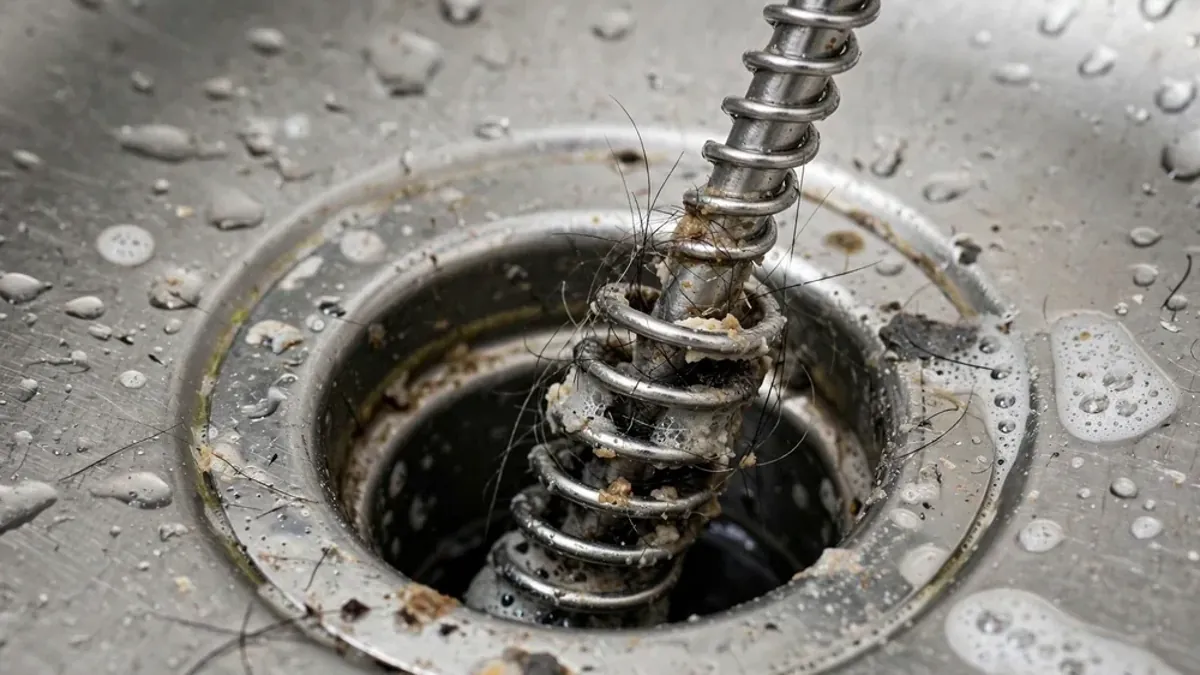
Does sand clog drains
Yes, sand can clog drains, and it does so differently from grease or hair. Sand is heavy, does not dissolve and settles in low spots of a pipe, where it collects into a hard plug and catches everything that follows. A few grains pass through, but a steady supply does not.
This guide explains how sand gets into drains, why it is hard to clear and what to do in Haverford, PA.
Where the sand comes from
Sand gets in from several places. Beach and sandbox cleanups sent down the tub drain, shoes rinsed in a utility sink, outdoor drains that collect washed-in sand and cracked or broken pipes that let soil in are the usual routes.
The last one matters most. If your sewer line is cracked, sand and soil enter from outside, and the clog returns until the pipe is repaired.
Signs of a sand or sediment clog
The symptoms look like other clogs, with a few differences.
A drain that clears briefly and clogs again
Sediment settles back in the same low spot.
Gritty residue in the trap
You may feel it when cleaning under the sink.
Gurgling and slow flow in the main line
A bed of sand narrows the pipe.
A clog right after outdoor washing
The sand went in recently.
Sand clog by location
Where the sand sits tells you what to do.
| Location | Likely source | Fix |
|---|---|---|
| Utility sink trap | Rinsing muddy items | Clean the trap, use a catch basket |
| Tub or shower drain | Sandy swimwear or kids' toys | Rinse outdoors, clean the trap |
| Outdoor or floor drain | Washed-in sand | Flush and jet the line |
| Sewer lateral | A crack letting soil in | Camera and repair |
Gritty clog that keeps returning?
Call. A camera shows whether the pipe is letting soil in.
What Haverford Township says about who handles a damaged lateral
Haverford Township Code treats the sewer service lateral as the property of the customer, and the Township says it is generally not liable for sewer or drain damage. If sand and soil are entering through a crack, the repair is the owner's to arrange.
Standard homeowners policies often exclude sewer backup without an endorsement, according to the Township's notice. Ask your insurer, and ask the Building and Codes Department at 610-446-1000 about permits for any dig.
How sand is cleared
A cable can break up a loose plug but may leave sand behind. A hydro jet flushes sand out with water, which is why plumbers often prefer it. A camera afterward confirms the pipe is clear and shows whether it is damaged.
See hydro jetting for how the jet works. If the camera shows a crack, sewer line repair covers the fix. For a one-time plug, drain cleaning may be enough.
Preventing sand clogs
Rinse sandy items outdoors, use a catch basket in utility sinks and keep outdoor drains covered. If you have a basement floor drain, avoid hosing sand and dirt into it.
If the clog returns without an obvious source, suspect the pipe. We serve Broomall and Ardmore as well as Haverford.
Why gravity and water speed matter
Sand moves along a pipe only while water is flowing fast enough to carry it. A pipe with a gentle slope and a small flow lets sand settle, and the next flow moves only the top layer. That is how a slow clog builds in a line that looks fine.
A pipe laid with too little slope or sagging in the middle makes this worse. A camera shows low spots, and a jet clears the sand in a single pass if the pipe is sound.
Outdoor drains, basement floor drains and window wells
Outdoor drains collect sand and soil after heavy rain, especially near gardens and driveways. Basement floor drains collect sediment when the floor is washed or when groundwater carries fines through the floor.
Check these drains twice a year and clear debris from the grates. A drain that has sand in the trap is telling you where to clean.
What a recurring sand clog tells you
If sand shows up in a trap with no clear source, the sewer line may be cracked or have a missing joint. Soil flows in with groundwater and builds a bed that blocks flow.
A camera inspection shows the entry point. Repair stops the sand, while cleaning only gives temporary relief.
What to do right after sand goes down a drain
If you notice sand going down, stop and run a lot of water in a steady flow for a few minutes. A strong flow can carry loose grains through the line before they settle. Do not use a plunger on a sand-filled trap, which can pack it tighter.
Then open the trap under the sink or the cleanout, if you are comfortable doing so, and rinse the sand out into a bucket. Sand left in the line is what turns into a plug.
How a plumber finds out how much sand is in the line
A camera shows a bed of sand on the bottom of the pipe and any low spot where it collects. The plumber measures how far the bed extends and whether the pipe itself is intact.
A jet then flushes the line from the cleanout toward the street, and a second camera pass confirms the line is clear. You see before and after footage in one visit.
Habits for sandy households
Families with sandboxes, gardens or beach trips can rinse boots and toys outdoors, keep a mesh strainer in the utility sink and use a floor mat at the door. Small steps keep a pound of sand from becoming a plumbing call.
A catch basket is cheap and easy to empty. It is the most effective tool we know of for keeping sand out of a drain.
When to call right away
Call if sewage is backing up, if the clog returns within days or if the line gurgles when other fixtures run. Those signs mean a larger blockage or damage in the line.
Our dispatch is open around the clock for backups.
Questions Haverford homeowners ask
A few grains usually pass. A steady supply settles and builds a plug.
No. Sand does not dissolve, and the chemicals can harm pipes.
A crack, break or open joint in the pipe may be letting soil in. A camera finds it.
Yes. The flow of water carries sand out of the pipe.
No. The lateral is the customer's property under the Township Code.