
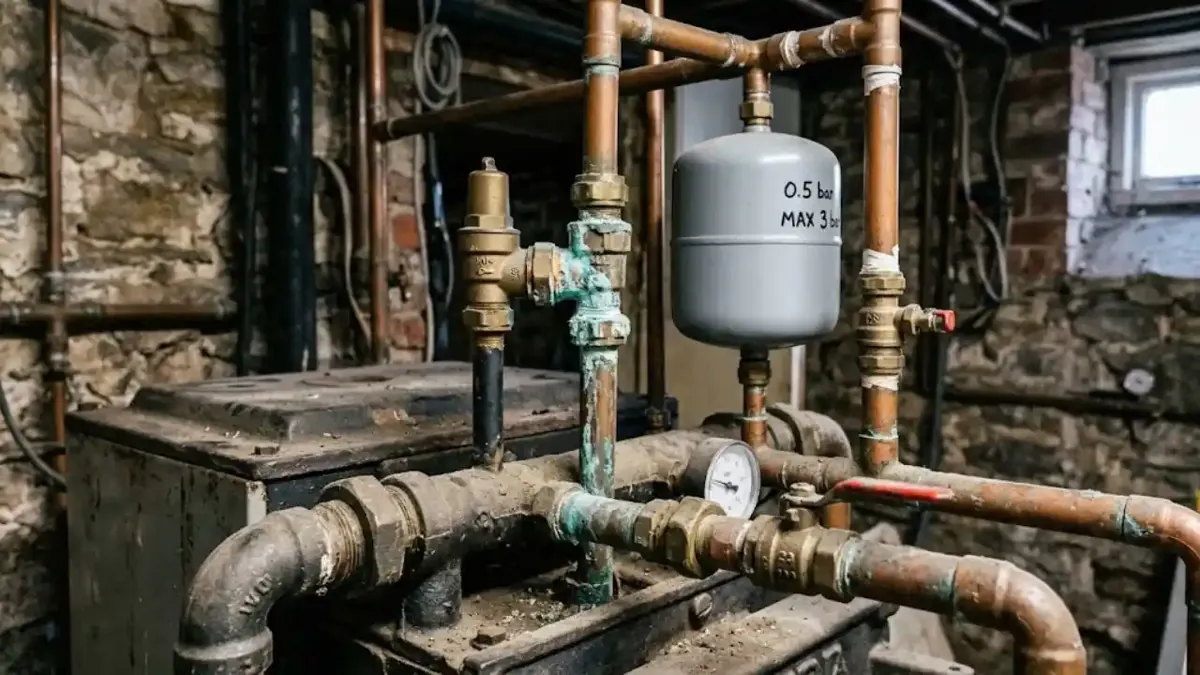
The boiler safety valve and why it matters
A boiler safety valve, also called a pressure relief valve, opens when pressure in the boiler climbs too high. It is a last line of defense that keeps a heating system from over-pressurizing, so a leaking or stuck valve is a real warning, not a cosmetic issue.
This guide explains what the valve does, why one leaks and why replacing it is a job for a licensed plumber in Haverford, PA.
What makes the valve open
Boilers run under modest pressure, and a gauge shows the number. If an expansion tank fails, if the fill valve lets in too much water or if the boiler overheats, pressure climbs and the valve opens to release it.
A valve that drips occasionally may be telling you the system pressure is too high. A valve that has corroded and will not reseat may drip regardless. Both call for a plumber, since the cause matters.
Why a safety valve leaks
The cause decides the fix.
High system pressure
A failed expansion tank or a leaking fill valve pushes pressure above the valve's setting.
Overheating
A control failure lets water get too hot and expand.
Worn valve seat
Age and mineral buildup keep the valve from closing fully.
Debris
Sediment lodged in the seat holds it open slightly.
What to check and what to leave alone
Know where to stop.
| Task | Homeowner? | Why |
|---|---|---|
| Reading the pressure gauge | Yes | Note the normal reading and any change |
| Looking for drips and rust | Yes | Photograph and tell the plumber |
| Lifting the valve lever to test | Plumber | Can release hot water and may not reseat |
| Replacing the valve | Plumber | Needs the right rating, tools and testing |
| Capping or plugging the valve | Never | It removes the safety function |
Boiler valve leaking?
Call. The plumber finds out why before replacing it.
Haverford Township permits and licensed work for boiler plumbing
Haverford Township says plumbing work done by contractors is performed by Township-licensed plumbers and inspected under the Pennsylvania Uniform Construction Code. The Building and Codes Department at 610-446-1000 can say whether a valve replacement needs a permit.
Many Haverford houses are older and may have boilers that have been in place a long time. Ask your plumber the age of the unit and whether a service history exists, so a new valve is not covering a larger problem.
What a plumber does at the visit
The plumber checks the system pressure, the expansion tank, the fill valve and the boiler temperature. If those are normal and the valve is worn, it is replaced with one of the correct rating and a discharge pipe is run to a safe place.
If the pressure is the cause, the plumber fixes that first. A new valve on a system that over-pressurizes will just leak again. See boiler repair for the plumbing side of boiler work.
What to do while you wait
If the valve is spraying hot water or steam, stay clear and turn off the boiler at its switch if you can do so safely. If you smell gas, leave the house and call the gas utility first.
A small drip can wait for a scheduled visit. Place a bucket and keep an eye on the gauge. For a related leak, see leak detection. We serve Wynnewood and Drexel Hill as well as Haverford.
The discharge pipe and where the water goes
A boiler relief valve must have a discharge pipe that runs to a safe spot, such as near the floor or to a drain. If the pipe is missing or short, hot water can spray on anyone nearby.
Look at where your pipe ends and whether anything blocks it. A pipe that ends in a bucket or a cap needs correction, and a plumber can fix it during the same visit.
Gauges, expansion tanks and what the numbers mean
The pressure gauge on a boiler shows whether the system sits in its normal range. A needle that climbs when the boiler heats and falls when it cools is normal in small amounts. A needle that goes much higher points to a failing expansion tank.
A plumber can test the expansion tank by checking its air charge. A waterlogged tank cannot absorb the extra volume, and the safety valve ends up doing the tank's job.
Age, parts and planning ahead
A boiler that has run for decades may be near the end of its life. If a valve leaks and the boiler body shows rust, plan for a replacement rather than a string of repairs.
Ask your plumber what you can expect from the unit and what a replacement would involve. Planning in summer is easier and cheaper than doing it on the coldest night.
Signs you should call right now
Call right away if the valve is spraying hot water, if steam is escaping, if the boiler is making a loud banging noise or if the pressure gauge is above the maker's limit. Turn off the boiler at its switch if you can do so without reaching near the valve.
If anyone smells gas, leave the house and call the gas utility before calling us. Do not use light switches or phones inside the house.
Why safety valves are standardized
Boiler relief valves are made to recognized pressure vessel and safety standards, and the plumbing code, including the International Plumbing Code, or IPC, requires proper discharge piping. The ASME mark on a boiler valve shows it meets those standards.
Look for the pressure rating stamped on the valve. A replacement must match the boiler's rating, not just the thread size.
Prevention
A yearly service visit checks the valve, the gauge and the expansion tank. Keep the area around the boiler clear and test the carbon monoxide alarm. A little maintenance catches the cause before the valve has to act.
Record the normal pressure reading when the system is cold so you can spot changes.
Questions Haverford homeowners ask
It can be a sign of high pressure or overheating. Have a plumber check it soon.
We do not recommend it. The valve must match the boiler's rating, and a poor install can fail when it matters.
It depends on the boiler. Check the manual or the label. A plumber tells you the right range.
Adding water through the fill valve may have raised the pressure. A plumber can check the expansion tank.
Ask the Building and Codes Department at 610-446-1000. Requirements depend on the work.