
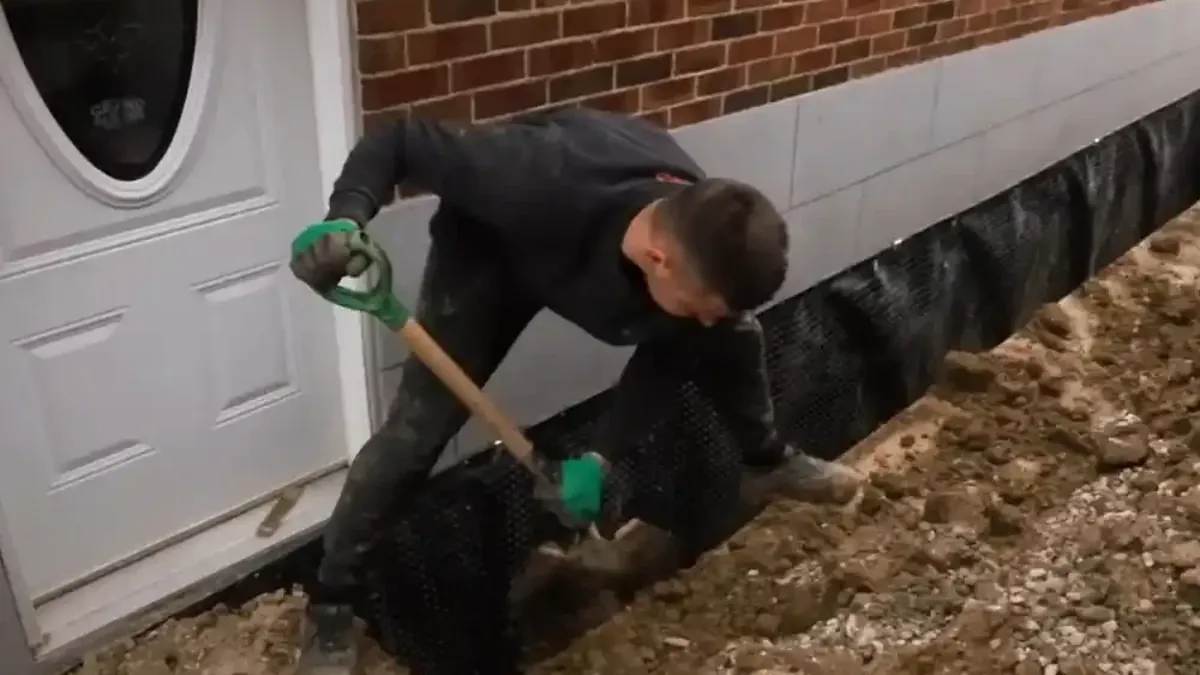
Interior basement waterproofing products, sorted by what they do
Interior basement waterproofing products fall into three groups: surface coatings, crack sealers and drainage systems. Only one of them manages water under pressure. The others have a place, but using them for the wrong problem wastes money in Haverford, PA basements.
This guide sorts the common products by what they actually do and when each fits.
Products and what each does
Match the product to the problem.
| Product | What it does | When it fits |
|---|---|---|
| Waterproof paint or masonry coating | Seals the wall surface | Minor dampness, not active seepage |
| Crack sealant, epoxy or polyurethane | Fills and seals a single crack | A specific crack, not wall-wide seepage |
| Interior drain tile with sump | Collects water at the floor edge and pumps it out | Seepage from groundwater pressure |
| Wall vapor barrier panels | Directs wall moisture down to a drain | Seepage down the wall into a drain system |
| Dehumidifier | Reduces air humidity | Condensation, not leaks |
The test that tells you which problem you have
Tape a piece of plastic to a dry spot on the wall or floor and leave it for a day or two. Moisture on the outside of the plastic means humidity in the air. Moisture underneath means water coming through the masonry.
Condensation needs ventilation and a dehumidifier. Seepage needs drainage. A coating on a wall that seeps is a short-lived fix.
What each product cannot do
Know the limits before you buy.
Paint
It does not stop water under pressure and may peel when the wall stays wet.
Crack sealer
It will not stop seepage at the floor joint or through block walls.
Drain tile
It manages water but does not stop it from entering. The pump must keep working.
Dehumidifier
It cannot keep up with a steady leak.
Not sure which fix your basement needs?
Call. We look first and price after.
Haverford Township notes for basement water
Haverford Township says it is generally not liable for sewer, drain or sump pump damage and recommends that homeowners ask their insurers about sewer, drain and sump pump backup coverage. Its notice also says standard homeowners policies do not cover sewer backups or flooding without an endorsement.
Plumbing work for a new drain or sump is done by Township-licensed contractors and inspected under the Uniform Construction Code. Ask the Building and Codes Department at 610-446-1000 about permits before work starts.
Why the pump matters as much as the drain
An interior drain system does nothing if the pump fails. The pit, the pump, the check valve and the discharge pipe form one system, and any weak part brings water back into the basement.
See sump pump repair for pump types and backups, and basement waterproofing for how a plumber approaches the whole job.
Fixes outside that cost little
Many wet basements improve with gutters that drain well, downspouts that empty several feet from the wall and soil that slopes away from the house. These steps cost far less than an interior system and sometimes solve the problem outright.
Do these first. If water still comes in, the interior systems become the next step. We serve Broomall and Bryn Mawr as well as Haverford.
How to read a product claim
Many products say waterproof on the label, but waterproof against what? A paint that resists humidity is not the same as a system that handles water pushing through a wall. Look for what the maker says about hydrostatic pressure and how long the product is meant to last.
If a label does not mention pressure, assume it is for dampness only. If a product says it will fix a flooding basement in a weekend, treat that as a sales line.
Why the wall type matters
Poured concrete, block and stone walls behave differently. Block walls have hollow cores that fill with water and need drainage at the base. Stone walls leak at many joints and rarely respond to a coating. Poured walls tend to leak at cracks and joints.
Tell any contractor which type you have. If you do not know, a plumber can tell you at a walk-through, and it affects which product and which drain layout make sense.
What to do while you wait for a repair
Move stored items off the floor, run a dehumidifier to control humidity and keep the sump pump working. Place a few inches of gravel or a drain mat under items you must leave on the floor.
Take dated photos of wet spots after each storm so you and the contractor can see the pattern. Water that shows up after every rain tells a different story from water that shows up once.
Costs you do not see on the product label
A product price covers the material, not the preparation. Walls need to be cleaned and dried, cracks opened and patched and loose paint removed. A pump, a discharge line and an electrical outlet for a sump system add to the total.
Ask for a written scope that lists preparation, materials, labor, electrical, permits and cleanup. A low price for the product can hide a high price for the rest.
Seasonal timing for basement work
Dry stretches in late summer and early fall are the best time to work, because the walls are dry enough for products to bond and the ground is not saturated. Spring work often means working in wet conditions.
If you are dealing with active leaks, a temporary fix such as a pump and a dehumidifier gets you through the wet season until conditions allow a full repair.
Questions to ask a contractor
Ask where the water comes from, what product they recommend and why, what happens if the power fails and what the warranty covers. A contractor who cannot explain the source is selling a product, not a fix.
Get a written scope and a price that includes the pump, the discharge and any permits.
Questions Haverford homeowners ask
Not when water comes through under pressure. It works for dampness, not seepage.
Usually yes. The pump moves the water the drain collects.
It controls humidity but cannot keep up with a steady leak.
Ask the Building and Codes Department at 610-446-1000. Plumbing and electrical parts may need a permit.
Fix the gutters, extend the downspouts and regrade soil away from the house.